தலைப்பு
பகடை
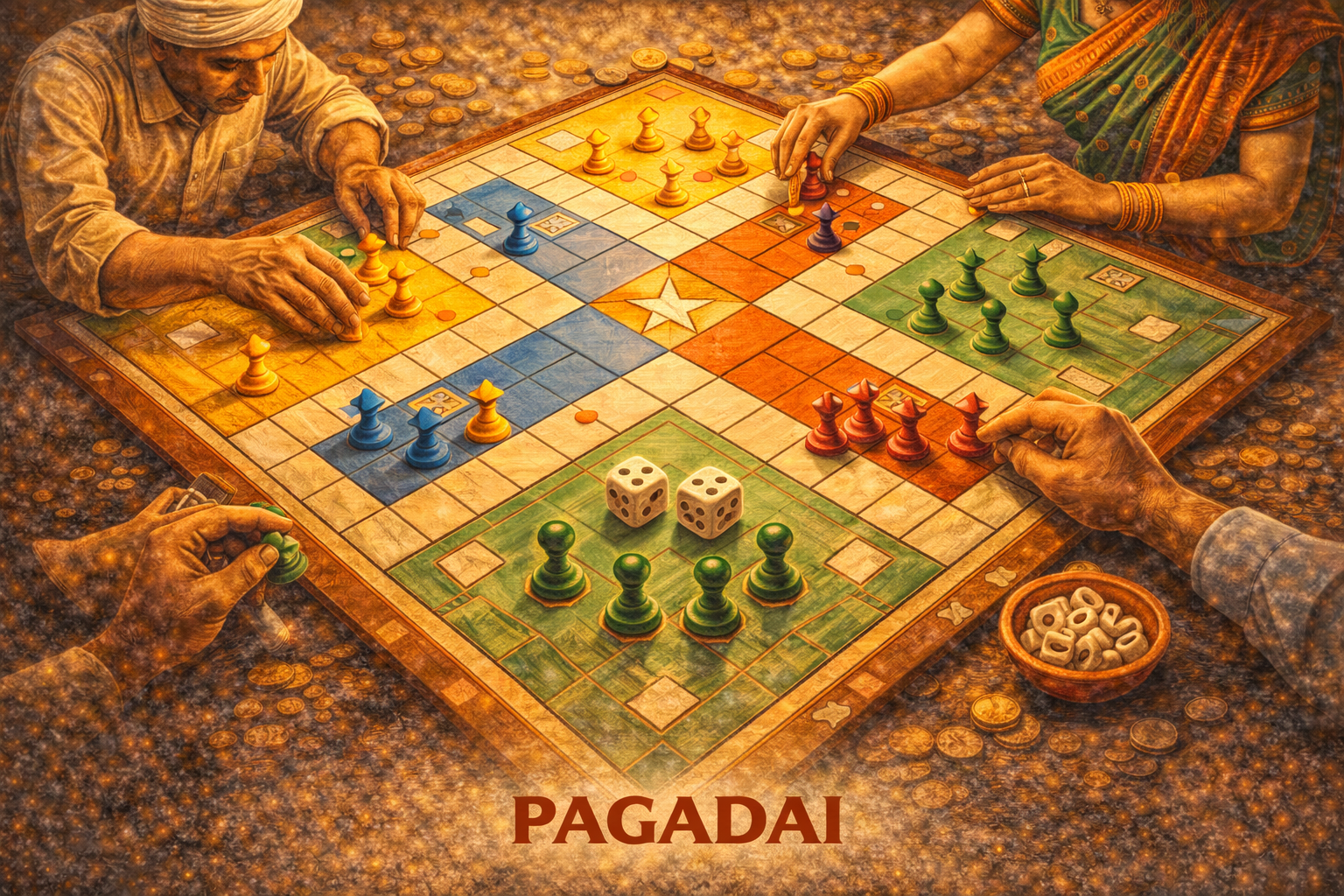
🎲 பகடை (Dice) – Probability அடிப்படைகள்
பகடை என்பது Probability (நிகழ்தகவு) கணிதத்தில் முக்கியமான பகுதி. இது ஒரு நிகழ்வு நடைபெறும் சாத்தியத்தை கணக்கிட உதவுகிறது.
📌 வரையறை
ஒரு நிகழ்வு நடைபெறும் வாய்ப்பை கணக்கிடுவது Probability (நிகழ்தகவு) ஆகும்.
🎲 பகடை பற்றிய தகவல்கள்
- ✔ ஒரு Dice-ல் 6 முகங்கள் இருக்கும்
- ✔ எண்கள்: 1, 2, 3, 4, 5, 6
- ✔ மொத்த முடிவுகள் = 6
🧮 முக்கிய சூத்திரம்
Probability = Favorable outcomes / Total outcomes
💡 எடுத்துக்காட்டு 1
ஒரு Dice வீசும்போது 3 வரும் Probability என்ன?
Favorable = 1 (only 3) Total = 6
Probability = 1 / 6
💡 எடுத்துக்காட்டு 2
Even number (2,4,6) வரும் Probability?
Favorable = 3 Total = 6
Probability = 3 / 6 = 1 / 2
💡 எடுத்துக்காட்டு 3
Odd number வரும் Probability?
(1,3,5) → 3 outcomes Probability = 3 / 6 = 1 / 2
🔄 முக்கிய கருத்துகள்
- ✔ Total outcomes = 6 (ஒரு Dice)
- ✔ Favorable outcomes count முக்கியம்
- ✔ Probability value 0 முதல் 1 வரை இருக்கும்
📏 முக்கிய குறிப்புகள்
- ✔ Probability = 0 → Impossible
- ✔ Probability = 1 → Certain
- ✔ Fraction simplify செய்ய வேண்டும்
முக்கிய குறிப்புகள் (TNPSC):
- ✔ P(E) = Favorable / Total
- ✔ Dice → Total = 6
- ✔ Even = 3, Odd = 3
தேர்வுகளில் “ஒரு Dice வீசும்போது Even/Prime number Probability என்ன?”, “Two dice sum என்ன?” போன்ற கேள்விகள் கேட்கப்படும்.
🎲 பகடை (Dice) – முக்கிய சூத்திரங்கள்
🧮 1. Probability அடிப்படை சூத்திரம்
P(E) = Favorable Outcomes / Total Outcomes
🧮 2. ஒரு Dice (Single Dice)
- ✔ Total outcomes = 6
- ✔ Numbers = 1, 2, 3, 4, 5, 6
🧮 3. இரண்டு Dice (Two Dice)
Total outcomes = 6 × 6 = 36
🧮 4. Complement Rule
P(E') = 1 - P(E)
🧮 5. Even / Odd
- ✔ Even numbers = 2, 4, 6 → 3 outcomes
- ✔ Odd numbers = 1, 3, 5 → 3 outcomes
- ✔ Probability = 3/6 = 1/2
🧮 6. Prime Numbers
- ✔ Prime = 2, 3, 5 → 3 outcomes
- ✔ Probability = 3/6 = 1/2
🧮 7. Sum (Two Dice)
- ✔ Sum = 7 → 6 outcomes
- ✔ Probability = 6/36 = 1/6
🧮 8. At least / At most
At least = ≥ (greater than or equal) At most = ≤ (less than or equal)
📏 முக்கிய குறிப்புகள்
- ✔ Probability value = 0 முதல் 1 வரை
- ✔ Total outcomes தெரிந்தால் easy
- ✔ Complement method பயன்படுத்தி shortcut solve செய்யலாம்
- ✔ Two dice → 36 combinations
TNPSC Quick Revision:
- ✔ P(E) = Favorable / Total
- ✔ 1 Dice = 6 outcomes
- ✔ 2 Dice = 36 outcomes
- ✔ P(E') = 1 - P(E)
🎲 பகடை (Dice) – 10 எடுத்துக்காட்டுகள் + Shortcut Tricks
📘 Example 1
ஒரு Dice வீசும்போது 4 வரும் Probability?
= 1 / 6
📘 Example 2
Even number வரும் Probability?
(2,4,6) → 3/6 = 1/2
📘 Example 3
Odd number வரும் Probability?
(1,3,5) → 3/6 = 1/2
📘 Example 4
Prime number வரும் Probability?
(2,3,5) → 3/6 = 1/2
📘 Example 5
6க்கு மேல் வர Probability?
= 0 (Impossible)
📘 Example 6
ஒரு Dice வீசும்போது 3க்கு குறைவான எண்?
(1,2) → 2/6 = 1/3
📘 Example 7
இரண்டு Dice வீசும்போது sum = 7?
(1,6),(2,5),(3,4),(4,3),(5,2),(6,1) → 6/36 = 1/6
📘 Example 8
இரண்டு Dice sum = 10?
(4,6),(5,5),(6,4) → 3/36 = 1/12
📘 Example 9
At least one 6 வரும் Probability?
Shortcut: 1 - P(no 6)
= 1 - (5/6 × 5/6) = 1 - 25/36 = 11/36
📘 Example 10
இரண்டு Dice இரண்டும் even வர Probability?
(3/6 × 3/6) = 9/36 = 1/4
🚀 Shortcut Tricks
- ✔ 1 Dice → Total = 6
- ✔ 2 Dice → Total = 36
- ✔ At least → 1 - (No case)
- ✔ Even = 3, Odd = 3
- ✔ Prime = 3 (2,3,5)
TNPSC Quick நினைவில் வைத்துக்கொள்ள:
- ✔ P(E) = Favorable / Total
- ✔ Sum 7 → 6 ways
- ✔ Complement method fast
மக்கள் கேட்கும் கேள்விகள்
உங்களுக்கான முக்கிய பதில்கள்
6 முகங்கள் கொண்ட கட்டம் (Cube).
6
7 (1–6, 2–5, 3–4)
அதிகபட்சம் 3 முகங்கள்
6
சேர்த்து 7 ஆகும் எண்கள் எதிர்முகம்
6
5
எதிர்முகம், அடுத்த முகம் (adjacent faces)
விரித்து காட்டிய வடிவில் இருந்து முகங்களை கண்டுபிடிக்கும் கேள்வி