தலைப்பு
இந்திய அரசியலமைப்பு
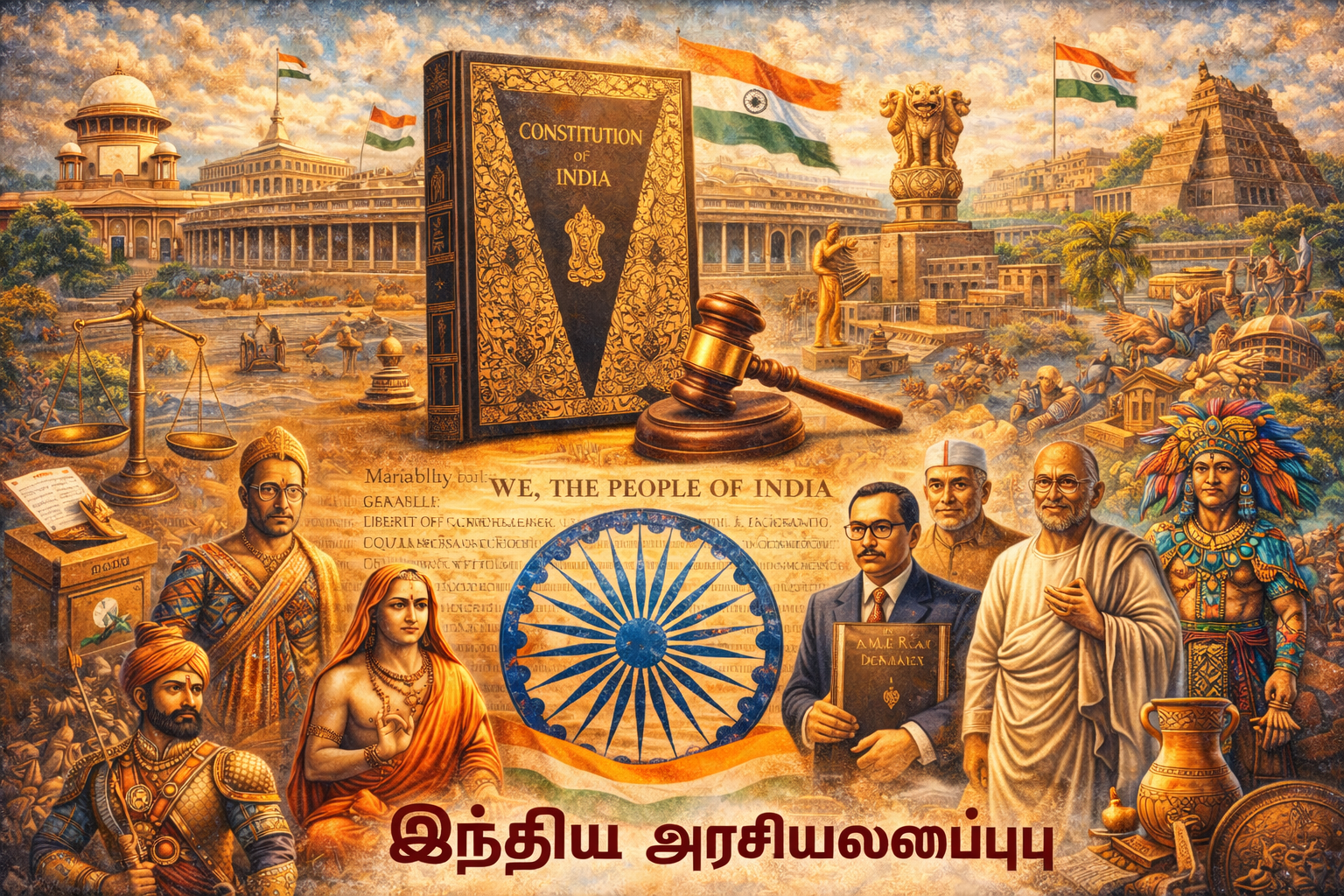
📜 இந்திய அரசியலமைப்பு (Indian Constitution) – முழு விளக்கம்
இந்திய அரசியலமைப்பு (Indian Constitution) என்பது இந்தியாவின் உச்ச சட்டமாகும். இது அரசின் அமைப்பு, அதிகாரங்கள் மற்றும் குடிமக்களின் உரிமைகள் மற்றும் கடமைகளை விவரிக்கிறது.
📅 உருவாக்கம்
- ✔ அரசியலமைப்பு சபை (Constituent Assembly) உருவாக்கியது
- ✔ 1949 நவம்பர் 26 – ஏற்றுக்கொள்ளப்பட்டது
- ✔ 1950 ஜனவரி 26 – அமலுக்கு வந்தது
👨⚖️ முக்கிய நபர்கள்
- ✔ டாக்டர் பி.ஆர்.அம்பேத்கர் – அரசியலமைப்பின் தந்தை
- ✔ ராஜேந்திர பிரசாத் – சபை தலைவர்
📘 முக்கிய அம்சங்கள்
- ✔ உலகின் நீளமான எழுத்து அரசியலமைப்பு
- ✔ கூட்டாட்சி அமைப்பு (Federal system)
- ✔ ஜனநாயக குடியரசு (Democratic Republic)
- ✔ மதச்சார்பின்மை (Secularism)
⚖️ அடிப்படை உரிமைகள் (Fundamental Rights)
- ✔ சமத்துவ உரிமை (Right to Equality)
- ✔ சுதந்திர உரிமை (Right to Freedom)
- ✔ சுரண்டல் எதிர்ப்பு (Right against Exploitation)
- ✔ மத சுதந்திரம் (Freedom of Religion)
- ✔ கல்வி மற்றும் கலாச்சாரம் (Cultural & Educational Rights)
- ✔ அரசியலமைப்பு பாதுகாப்பு (Right to Constitutional Remedies)
📌 அடிப்படை கடமைகள் (Fundamental Duties)
- ✔ அரசியலமைப்பை மதிக்க வேண்டும்
- ✔ தேசிய ஒற்றுமையை காக்க வேண்டும்
- ✔ சூழலை பாதுகாக்க வேண்டும்
🏛️ அரசின் அமைப்பு
- ✔ சட்டமன்றம் (Legislature) – சட்டம் இயற்றும்
- ✔ நிர்வாகம் (Executive) – சட்டம் செயல்படுத்தும்
- ✔ நீதித்துறை (Judiciary) – சட்டத்தை பாதுகாக்கும்
🌏 முக்கியத்துவம்
- ✔ நாட்டின் அடிப்படை சட்டம்
- ✔ குடிமக்களின் உரிமைகளை பாதுகாக்கிறது
- ✔ அரசின் அதிகாரத்தை வரையறுக்கிறது
முக்கிய குறிப்புகள் (TNPSC):
- ✔ 26 Jan 1950 – Constitution लागू
- ✔ Ambedkar – Father
- ✔ 6 Fundamental Rights
- ✔ Federal + Parliamentary system
TNPSC தேர்வுகளில் “அரசியலமைப்பு எப்போது?”, “Fundamental Rights என்ன?”, “Ambedkar யார்?” போன்ற கேள்விகள் இந்தத் தலைப்பிலிருந்து அடிக்கடி கேட்கப்படுகின்றன.
ஆகையால், இந்திய அரசியலமைப்பு பொதுஅறிவியல் மற்றும் அரசியல் பாடங்களில் மிகவும் முக்கியமான தலைப்பாகும்.
⚖️ அடிப்படை உரிமைகள் (Fundamental Rights) – முழுமையான விளக்கம்
அடிப்படை உரிமைகள் (Fundamental Rights) என்பது இந்திய அரசியலமைப்பின் முக்கிய பகுதியாகும். இவை குடிமக்களுக்கு வழங்கப்படும் அடிப்படை சுதந்திரங்களாகும் மற்றும் அரசால் பாதுகாக்கப்படுகின்றன.
📜 அரசியலமைப்பில் இடம்
- ✔ பகுதி III (Part III)
- ✔ கட்டுரைகள் 12 முதல் 35 வரை
⚖️ அடிப்படை உரிமைகளின் வகைகள்
1. சமத்துவ உரிமை (Right to Equality)
- ✔ சட்ட முன் சமத்துவம் (Article 14)
- ✔ பாகுபாடு தடை (Article 15)
- ✔ சம வேலைக்கு சம ஊதியம்
2. சுதந்திர உரிமை (Right to Freedom)
- ✔ பேசும் சுதந்திரம் (Article 19)
- ✔ சுதந்திரமாக வாழும் உரிமை (Article 21)
- ✔ கல்வி உரிமை (Article 21A)
3. சுரண்டல் எதிர்ப்பு உரிமை (Right against Exploitation)
- ✔ குழந்தைத் தொழில் தடை (Article 24)
- ✔ கட்டாய வேலை தடை
4. மத சுதந்திர உரிமை (Freedom of Religion)
- ✔ மதத்தை பின்பற்றும் சுதந்திரம் (Article 25)
5. கலாச்சாரம் மற்றும் கல்வி உரிமை (Cultural & Educational Rights)
- ✔ சிறுபான்மை உரிமைகள் (Article 29, 30)
6. அரசியலமைப்பு பாதுகாப்பு உரிமை (Right to Constitutional Remedies)
- ✔ Article 32 – “Heart and Soul” (Ambedkar)
📌 Writs (நீதிமன்ற ஆணைகள்)
- ✔ Habeas Corpus
- ✔ Mandamus
- ✔ Prohibition
- ✔ Certiorari
- ✔ Quo Warranto
⚠️ முக்கிய அம்சங்கள்
- ✔ Fundamental Rights நீதிமன்றத்தில் அமுல்படுத்தலாம்
- ✔ சில உரிமைகள் நியாயமான கட்டுப்பாடுகளுடன் இருக்கும்
முக்கிய குறிப்புகள் (TNPSC):
- ✔ Part III (Articles 12–35)
- ✔ 6 Fundamental Rights
- ✔ Article 32 – Heart & Soul
- ✔ 5 Writs முக்கியம்
TNPSC தேர்வுகளில் “Article 32 என்ன?”, “எத்தனை Fundamental Rights?”, “Writs என்ன?” போன்ற கேள்விகள் இந்தத் தலைப்பிலிருந்து அடிக்கடி கேட்கப்படுகின்றன.
ஆகையால், அடிப்படை உரிமைகள் இந்திய அரசியல் பாடத்தில் மிகவும் முக்கியமான தலைப்பாகும்.
📜 அரசு கொள்கை வழிகாட்டுதல்கள் (Directive Principles of State Policy) – முழுமையான விளக்கம்
அரசு கொள்கை வழிகாட்டுதல்கள் (Directive Principles of State Policy – DPSP) என்பது இந்திய அரசியலமைப்பின் ஒரு முக்கிய பகுதி ஆகும். இவை அரசு மக்கள் நலன் மற்றும் சமூக நீதி அடிப்படையில் ஆட்சி செய்ய வழிகாட்டுகின்றன.
📘 அரசியலமைப்பில் இடம்
- ✔ பகுதி IV (Part IV)
- ✔ கட்டுரைகள் 36 முதல் 51 வரை
⚖️ DPSP என்ன?
இவை சட்டமாக அமுல்படுத்தப்பட முடியாதவை (Non-justiciable). ஆனால், அரசாங்கம் கொள்கைகள் அமைக்கும் போது இவற்றை பின்பற்ற வேண்டும்.
📊 DPSP வகைகள்
1. சமூகநீதி கொள்கைகள் (Socialistic Principles)
- ✔ சம வேலைக்கு சம ஊதியம்
- ✔ பொருளாதார சமத்துவம்
- ✔ ஏழை மக்களின் நலன்
2. காந்திய கொள்கைகள் (Gandhian Principles)
- ✔ கிராம சுயாட்சி (Village Panchayat)
- ✔ கைத்தொழில் வளர்ச்சி
3. சுதந்திர கொள்கைகள் (Liberal Principles)
- ✔ நீதித்துறை சுயாதீனம்
- ✔ சர்வதேச அமைதி
📌 முக்கிய கட்டுரைகள்
- ✔ Article 38 – சமூக நீதி
- ✔ Article 39 – பொருளாதார நலன்
- ✔ Article 40 – கிராம பஞ்சாயத்து
- ✔ Article 44 – ஒருங்கிணைந்த குடிமை சட்டம்
- ✔ Article 45 – கல்வி
- ✔ Article 48A – சுற்றுச்சூழல் பாதுகாப்பு
⚖️ DPSP vs Fundamental Rights
- ✔ Fundamental Rights – சட்டத்தால் பாதுகாக்கப்படும்
- ✔ DPSP – வழிகாட்டுதல்கள் மட்டும்
🌏 முக்கியத்துவம்
- ✔ நலவாழ்வு அரசு (Welfare State) உருவாக்கம்
- ✔ சமூக மற்றும் பொருளாதார சமநிலை
- ✔ மக்கள் நல கொள்கைகள்
முக்கிய குறிப்புகள் (TNPSC):
- ✔ Part IV (Articles 36–51)
- ✔ Non-justiciable
- ✔ Welfare State concept
- ✔ Gandhian principles முக்கியம்
TNPSC தேர்வுகளில் “DPSP என்ன?”, “Part IV என்ன?”, “Article 40 என்ன?” போன்ற கேள்விகள் இந்தத் தலைப்பிலிருந்து அடிக்கடி கேட்கப்படுகின்றன.
ஆகையால், Directive Principles இந்திய அரசியல் பாடத்தில் மிகவும் முக்கியமான தலைப்பாகும்.
🏛️ இந்திய பாராளுமன்றம் (Parliament – Lok Sabha & Rajya Sabha) – முழு விளக்கம்
இந்திய பாராளுமன்றம் (Parliament) என்பது நாட்டின் சட்டமன்ற அமைப்பாகும். இது சட்டங்களை உருவாக்கும் மற்றும் அரசின் செயல்பாடுகளை கண்காணிக்கும் முக்கிய அமைப்பாகும்.
📘 அமைப்பு
- ✔ குடியரசுத் தலைவர் (President)
- ✔ லோக் சபா (Lok Sabha) – கீழ் அவை
- ✔ ராஜ்ய சபா (Rajya Sabha) – மேல் அவை
🏛️ லோக் சபா (Lok Sabha)
- ✔ மக்கள் அவை (House of the People)
- ✔ நேரடி தேர்தல் மூலம் தேர்வு
- ✔ காலம்: 5 ஆண்டுகள்
- ✔ அதிகபட்ச உறுப்பினர்கள்: 552
- ✔ Speaker தலைமையில் இயங்கும்
⚡ அதிகாரங்கள்
- ✔ பணச்சட்டம் (Money Bill) அறிமுகம்
- ✔ அரசை கட்டுப்படுத்துதல்
- ✔ நம்பிக்கையில்லா தீர்மானம்
🏛️ ராஜ்ய சபா (Rajya Sabha)
- ✔ மாநிலங்களின் அவை (Council of States)
- ✔ மறைமுக தேர்தல்
- ✔ நிரந்தர அவை (Permanent body)
- ✔ உறுப்பினர்கள்: 250 வரை
- ✔ Vice President – Chairman
⚡ அதிகாரங்கள்
- ✔ சட்டங்களை பரிசீலனை
- ✔ மாநிலங்களை பிரதிநிதித்துவப்படுத்துதல்
⚖️ Lok Sabha vs Rajya Sabha
| அம்சம் | லோக் சபா | ராஜ்ய சபா |
|---|---|---|
| வகை | கீழ் அவை | மேல் அவை |
| தேர்தல் | நேரடி | மறைமுக |
| காலம் | 5 ஆண்டுகள் | நிரந்தரம் |
| தலைவர் | Speaker | Vice President |
🌏 முக்கியத்துவம்
- ✔ சட்டம் இயற்றும் அதிகாரம்
- ✔ ஜனநாயகத்தின் அடிப்படை
- ✔ மக்களின் பிரதிநிதித்துவம்
முக்கிய குறிப்புகள் (TNPSC):
- ✔ Lok Sabha – 5 years
- ✔ Rajya Sabha – Permanent
- ✔ Money Bill – Lok Sabha
- ✔ Vice President – Chairman of Rajya Sabha
TNPSC தேர்வுகளில் “Lok Sabha காலம்?”, “Rajya Sabha என்ன?”, “Money Bill எங்கு?” போன்ற கேள்விகள் இந்தத் தலைப்பிலிருந்து அடிக்கடி கேட்கப்படுகின்றன.
ஆகையால், பாராளுமன்றம் இந்திய அரசியல் பாடத்தில் மிகவும் முக்கியமான தலைப்பாகும்.
⚖️ நீதித்துறை – உச்ச நீதிமன்றம் (Supreme Court of India) – முழு விளக்கம்
இந்தியாவின் உச்ச நீதிமன்றம் (Supreme Court) என்பது நாட்டின் உயர்ந்த நீதிமன்றமாகும். இது அரசியலமைப்பை பாதுகாக்கும் மற்றும் சட்டங்களை விளக்கும் முக்கிய அமைப்பாகும்.
📍 இருப்பிடம்
- ✔ நியூ டெல்லி (New Delhi)
📅 நிறுவல்
- ✔ 1950 ஜனவரி 28
👨⚖️ அமைப்பு
- ✔ தலைமை நீதிபதி (Chief Justice of India)
- ✔ பிற நீதிபதிகள்
- ✔ அதிகபட்சம் – 34 நீதிபதிகள்
⚖️ அதிகாரங்கள்
1. முதன்மை அதிகாரம் (Original Jurisdiction)
- ✔ மாநிலங்கள் இடையேயான தகராறு
2. மேல்முறையீட்டு அதிகாரம் (Appellate Jurisdiction)
- ✔ கீழ் நீதிமன்ற தீர்ப்புகள் மீது மேல்முறையீடு
3. ஆலோசனை அதிகாரம் (Advisory Jurisdiction)
- ✔ குடியரசுத் தலைவர் ஆலோசனை கேட்கலாம்
📜 நீதிமன்ற ஆணைகள் (Writs)
- ✔ Habeas Corpus
- ✔ Mandamus
- ✔ Prohibition
- ✔ Certiorari
- ✔ Quo Warranto
⚡ நீதித்துறையின் அம்சங்கள்
- ✔ நீதித்துறை சுயாதீனம் (Judicial Independence)
- ✔ அரசியலமைப்பு பாதுகாப்பு
- ✔ நீதித்துறை மறுஆய்வு (Judicial Review)
⚖️ முக்கியத்துவம்
- ✔ குடிமக்களின் உரிமைகளை பாதுகாக்கிறது
- ✔ சட்டத்தின் ஆட்சியை நிலைநிறுத்துகிறது
- ✔ அரசின் அதிகாரத்தை கட்டுப்படுத்துகிறது
முக்கிய குறிப்புகள் (TNPSC):
- ✔ Supreme Court – Highest court
- ✔ 1950 – Established
- ✔ 34 judges
- ✔ Judicial Review முக்கியம்
TNPSC தேர்வுகளில் “Supreme Court எங்கு?”, “Writs என்ன?”, “Judicial review என்ன?” போன்ற கேள்விகள் இந்தத் தலைப்பிலிருந்து அடிக்கடி கேட்கப்படுகின்றன.
ஆகையால், நீதித்துறை இந்திய அரசியல் பாடத்தில் மிகவும் முக்கியமான தலைப்பாகும்.
🇮🇳 குடியரசுத் தலைவர் & பிரதமர் (President & Prime Minister of India) – முழு விளக்கம்
இந்திய அரசியலில் குடியரசுத் தலைவர் (President) மற்றும் பிரதமர் (Prime Minister) முக்கியமான பதவிகள் ஆகும். இவர்கள் நிர்வாகத்தின் (Executive) முக்கிய தலைவர்களாக செயல்படுகின்றனர்.
👑 குடியரசுத் தலைவர் (President of India)
- ✔ நாட்டின் தலைமை (Head of the State)
- ✔ அரசியலமைப்பின் பாதுகாவலர்
- ✔ ஆயுதப்படைகளின் தலைமை தளபதி
📅 பதவிக்காலம்
- ✔ 5 ஆண்டுகள்
🗳️ தேர்தல் முறை
- ✔ தேர்தல் கல்லூரி (Electoral College)
- ✔ எம்.பி & எம்.எல்.ஏக்கள் வாக்களிப்பு
⚖️ அதிகாரங்கள்
- ✔ நிர்வாக அதிகாரம்
- ✔ சட்ட அதிகாரம்
- ✔ நீதித் துறை அதிகாரம் (மன்னிப்பு)
- ✔ அவசரநிலை அறிவிப்பு
👨💼 பிரதமர் (Prime Minister)
- ✔ அரசின் தலைவர் (Head of the Government)
- ✔ அமைச்சரவை தலைவர்
- ✔ உண்மையான நிர்வாக அதிகாரம்
📅 பதவிக்காலம்
- ✔ Lok Sabha நம்பிக்கையைப் பொறுத்தது
⚖️ அதிகாரங்கள்
- ✔ அமைச்சர்களை தேர்வு செய்கிறார்
- ✔ அரசின் கொள்கைகளை அமைக்கிறார்
- ✔ பாராளுமன்றத்தை வழிநடத்துகிறார்
⚖️ President vs Prime Minister
| அம்சம் | President | Prime Minister |
|---|---|---|
| பங்கு | Head of State | Head of Government |
| அதிகாரம் | Nominal | Real power |
| தேர்தல் | Indirect | Lok Sabha majority |
| பதவிக்காலம் | 5 years | No fixed term |
🌏 முக்கியத்துவம்
- ✔ நாட்டின் நிர்வாகம் இயங்க உதவுகிறது
- ✔ ஜனநாயகத்தின் அடிப்படை அமைப்பு
முக்கிய குறிப்புகள் (TNPSC):
- ✔ President – Nominal head
- ✔ Prime Minister – Real executive
- ✔ Electoral College
- ✔ Council of Ministers முக்கியம்
TNPSC தேர்வுகளில் “President யார் தேர்வு செய்கிறார்?”, “Prime Minister அதிகாரம் என்ன?” போன்ற கேள்விகள் இந்தத் தலைப்பிலிருந்து அடிக்கடி கேட்கப்படுகின்றன.
ஆகையால், குடியரசுத் தலைவர் மற்றும் பிரதமர் இந்திய அரசியல் பாடத்தில் மிகவும் முக்கியமான தலைப்பாகும்.
📜 அரசியலமைப்பு திருத்தங்கள் (Constitutional Amendments) – முழு விளக்கம்
அரசியலமைப்பு திருத்தங்கள் (Amendments) என்பது இந்திய அரசியலமைப்பில் தேவையான மாற்றங்கள் மற்றும் திருத்தங்களை செய்யும் செயலாகும். காலத்திற்கேற்ப சட்டங்களை புதுப்பிக்க இது மிகவும் அவசியமானது.
📘 அரசியலமைப்பில் இடம்
- ✔ Article 368 – Amendment Procedure
⚖️ திருத்த முறைகள்
1. எளிய பெரும்பான்மை (Simple Majority)
- ✔ சாதாரண சட்டம் போல திருத்தம்
2. சிறப்பு பெரும்பான்மை (Special Majority)
- ✔ பாராளுமன்றத்தில் 2/3 பெரும்பான்மை
3. மாநில ஒப்புதல் (Special + State Ratification)
- ✔ மாநிலங்களின் ஒப்புதல் அவசியம்
📊 முக்கிய திருத்தங்கள்
| திருத்தம் | ஆண்டு | முக்கிய அம்சம் |
|---|---|---|
| 42வது திருத்தம் | 1976 | Mini Constitution |
| 44வது திருத்தம் | 1978 | Emergency powers குறைப்பு |
| 73வது திருத்தம் | 1992 | Panchayati Raj |
| 74வது திருத்தம் | 1992 | Municipalities |
⚡ முக்கிய அம்சங்கள்
- ✔ அரசியலமைப்பு மாற்றம் சாத்தியம்
- ✔ ஜனநாயக வளர்ச்சி
- ✔ சமூக மாற்றத்திற்கு உதவும்
⚖️ அடிப்படை கட்டமைப்பு கோட்பாடு (Basic Structure Doctrine)
அரசியலமைப்பின் அடிப்படை அம்சங்களை மாற்ற முடியாது. இது நீதிமன்றம் பாதுகாக்கும் முக்கிய கோட்பாடாகும்.
முக்கிய குறிப்புகள் (TNPSC):
- ✔ Article 368
- ✔ 42nd – Mini Constitution
- ✔ 73rd & 74th – Local governance
- ✔ Basic Structure Doctrine முக்கியம்
TNPSC தேர்வுகளில் “Article 368 என்ன?”, “42nd Amendment என்ன?”, “Basic Structure என்ன?” போன்ற கேள்விகள் இந்தத் தலைப்பிலிருந்து அடிக்கடி கேட்கப்படுகின்றன.
ஆகையால், அரசியலமைப்பு திருத்தங்கள் இந்திய அரசியல் பாடத்தில் மிகவும் முக்கியமான தலைப்பாகும்.
மக்கள் கேட்கும் கேள்விகள்
உங்களுக்கான முக்கிய பதில்கள்
1950 ஜனவரி 26
டாக்டர் பி.ஆர். அம்பேத்கர் (Drafting Committee Chairman)
அரசியலமைப்பு (Constitution)
6
11
நாட்டின் தலைமைத் தலைவர் (Head of the State)
அரசின் தலைமை நிர்வாகி (Head of the Government)
2 (லோக்சபா & ராஜ்யசபா)
உச்சநீதிமன்றம் (Supreme Court)
குடியரசுத் தலைவர்