தலைப்பு
இந்திய வரலாறு
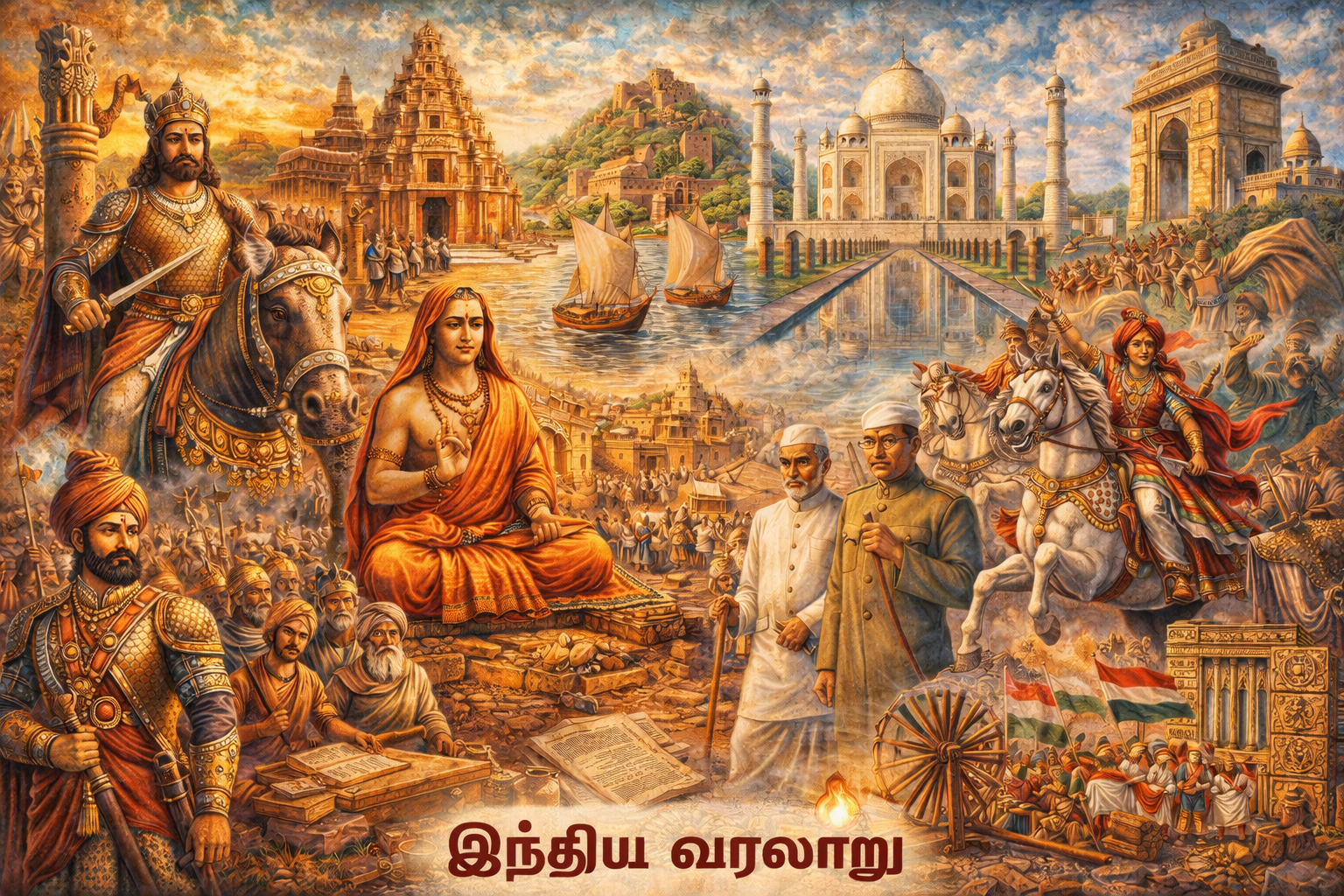
👑 குப்தர்கள் காலம் – பொற்காலம் (Gupta Period – Golden Age of India)
குப்தர்கள் காலம் (Gupta Period) இந்திய வரலாற்றில் “பொற்காலம்” என அழைக்கப்படுகிறது. இந்த காலம் கிபி 320 முதல் 550 வரை இந்தியாவில் ஆட்சி செய்தது. கலை, அறிவியல், இலக்கியம் மற்றும் கல்வி ஆகிய துறைகளில் மிகுந்த முன்னேற்றம் ஏற்பட்டது.
📅 காலம்
- ✔ கிபி 320 – 550
👑 முக்கிய அரசர்கள்
- ✔ சந்திரகுப்தர் I (Chandragupta I)
- ✔ சமுத்ரகுப்தர் (Samudragupta)
- ✔ சந்திரகுப்தர் II (Vikramaditya)
⚔️ அரசியல் சாதனைகள்
- ✔ சமுத்ரகுப்தர் – “இந்திய நெப்போலியன்”
- ✔ பெரிய பேரரசு அமைத்தனர்
- ✔ நிலையான ஆட்சி
📚 இலக்கிய வளர்ச்சி
- ✔ காளிதாசர் (Kalidasa) – புகழ்பெற்ற கவிஞர்
- ✔ அபிஞ்ஞான சகுந்தளம் (Abhijnanasakuntalam)
- ✔ சமஸ்கிருத இலக்கியம் வளர்ச்சி
🔬 அறிவியல் முன்னேற்றம்
- ✔ ஆர்யபட்டர் (Aryabhata) – கணிதம் & விண்வெளி
- ✔ பூஜ்யம் (Zero) கண்டுபிடிப்பு
- ✔ சூரிய மையக் கோட்பாடு (Heliocentric ideas)
🏛️ கலை மற்றும் கட்டிடக்கலை
- ✔ அஜந்தா குகைகள் (Ajanta caves)
- ✔ சிற்பக்கலை, ஓவியக்கலை வளர்ச்சி
🏫 கல்வி
- ✔ நாலந்தா பல்கலைக்கழகம் (Nalanda University)
- ✔ உலகின் முக்கிய கல்வி மையம்
🌏 ஏன் “பொற்காலம்”?
- ✔ அமைதி மற்றும் வளமை
- ✔ கலை, அறிவியல் வளர்ச்சி
- ✔ கல்வி மற்றும் இலக்கிய முன்னேற்றம்
முக்கிய குறிப்புகள் (TNPSC):
- ✔ Gupta period = Golden Age
- ✔ Samudragupta – Napoleon of India
- ✔ Kalidasa – Literature
- ✔ Aryabhata – Science
TNPSC தேர்வுகளில் “Golden age எது?”, “Aryabhata யார்?”, “Kalidasa என்ன எழுதினார்?” போன்ற கேள்விகள் இந்தத் தலைப்பிலிருந்து அடிக்கடி கேட்கப்படுகின்றன.
ஆகையால், குப்தர்கள் காலம் இந்திய வரலாற்றில் மிகவும் முக்கியமான தலைப்பாகும்.
🕌 தில்லி சுல்தான்கள் (Delhi Sultanate) – முழு விளக்கம்
தில்லி சுல்தான்கள் காலம் இந்திய வரலாற்றில் முக்கியமான ஒரு கட்டமாகும். இது கிபி 1206 முதல் 1526 வரை வட இந்தியாவில் முஸ்லிம் அரசர்களால் ஆட்சி செய்யப்பட்டது.
📅 காலம்
- ✔ கிபி 1206 – 1526
👑 முக்கிய வம்சங்கள்
- ✔ மமலூக் வம்சம் (Slave Dynasty)
- ✔ கில்ஜி வம்சம் (Khilji Dynasty)
- ✔ துக்ளக் வம்சம் (Tughlaq Dynasty)
- ✔ சயித் வம்சம் (Sayyid Dynasty)
- ✔ லோதி வம்சம் (Lodi Dynasty)
👨⚔️ முக்கிய அரசர்கள்
- ✔ குத்ப்-உத்-தீன் ஐபக் (Qutb-ud-din Aibak)
- ✔ இல்துத்தமிஷ் (Iltutmish)
- ✔ அலாவுதீன் கில்ஜி (Alauddin Khilji)
- ✔ முகமது பின் துக்ளக் (Muhammad bin Tughlaq)
- ✔ இப்ராஹிம் லோதி (Ibrahim Lodi)
⚔️ அரசியல் சாதனைகள்
- ✔ வட இந்தியாவில் வலுவான ஆட்சி
- ✔ புதிய நிர்வாக முறை
- ✔ நிலவரி வசூல் முறை
🏛️ கட்டிடக்கலை
- ✔ குதுப் மினார் (Qutub Minar)
- ✔ மசூதிகள் மற்றும் கோட்டைகள்
💰 பொருளாதாரம்
- ✔ வேளாண்மை
- ✔ வர்த்தகம் வளர்ச்சி
- ✔ நிலவரி முறை
📊 முக்கிய அம்சங்கள்
- ✔ 5 வம்சங்கள் ஆட்சி செய்தன
- ✔ முஸ்லிம் ஆட்சி தொடக்கம்
- ✔ கலாச்சார கலப்பு (Cultural mix)
⚠️ முடிவு
1526ல் பானிபட் போரில் இப்ராஹிம் லோதி தோல்வியடைந்ததால் தில்லி சுல்தான்கள் ஆட்சி முடிவுக்கு வந்தது. பின்னர் முகலாயர்கள் ஆட்சி தொடங்கியது.
முக்கிய குறிப்புகள் (TNPSC):
- ✔ 1206 – 1526
- ✔ 5 dynasties
- ✔ Qutub Minar முக்கியம்
- ✔ End: First Battle of Panipat
TNPSC தேர்வுகளில் “Delhi Sultanate காலம்?”, “Khilji யார்?”, “Qutub Minar யார் கட்டினார்?” போன்ற கேள்விகள் இந்தத் தலைப்பிலிருந்து அடிக்கடி கேட்கப்படுகின்றன.
ஆகையால், தில்லி சுல்தான்கள் இந்திய வரலாற்றில் மிகவும் முக்கியமான தலைப்பாகும்.
🏰 முகலாயர்கள் (Mughal Empire) – முழு விளக்கம்
முகலாயர்கள் (Mughals) இந்திய வரலாற்றில் மிக முக்கியமான பேரரசாகும். இது கிபி 1526 முதல் 1857 வரை இந்தியாவின் பெரும்பகுதியை ஆட்சி செய்தது.
📅 காலம்
- ✔ கிபி 1526 – 1857
👑 முக்கிய அரசர்கள்
- ✔ பாபர் (Babur) – பேரரசை நிறுவினார்
- ✔ ஹுமாயூன் (Humayun)
- ✔ அக்பர் (Akbar) – சிறந்த ஆட்சி
- ✔ ஜகங்கீர் (Jahangir)
- ✔ ஷாஜகான் (Shah Jahan)
- ✔ அவுரங்கசீப் (Aurangzeb)
⚔️ தொடக்கம்
1526ல் நடந்த முதல் பானிபட் போரில் (First Battle of Panipat) பாபர், இப்ராஹிம் லோடியை தோற்கடித்து முகலாய பேரரசை நிறுவினார்.
🌟 அக்பரின் ஆட்சி
- ✔ மத ஒற்றுமை (Religious tolerance)
- ✔ தின்-இ-இலாஹி (Din-i-Ilahi)
- ✔ நவரத்தினங்கள் (Navaratnas)
🏛️ கட்டிடக்கலை
- ✔ தாஜ்மஹால் (Taj Mahal) – ஷாஜகான்
- ✔ ரெட் ஃபோர்ட் (Red Fort)
- ✔ ஜாமா மசூதி (Jama Masjid)
💰 நிர்வாகம் & பொருளாதாரம்
- ✔ மன்சப்தாரி முறை (Mansabdari system)
- ✔ நிலவரி முறை (Land revenue system)
- ✔ வேளாண்மை மற்றும் வர்த்தகம் வளர்ச்சி
📚 கலை மற்றும் கலாச்சாரம்
- ✔ ஓவியக்கலை (Miniature paintings)
- ✔ பாரசீக கலாச்சாரம்
- ✔ இலக்கிய வளர்ச்சி
⚠️ வீழ்ச்சி
- ✔ அவுரங்கசீப் காலத்திற்குப் பின் பலவீனம்
- ✔ உள்நாட்டு கிளர்ச்சி
- ✔ 1857 கிளர்ச்சிக்குப் பின் முடிவு
முக்கிய குறிப்புகள் (TNPSC):
- ✔ 1526 – 1857
- ✔ Babur – Founder
- ✔ Akbar – Greatest ruler
- ✔ Taj Mahal – Shah Jahan
TNPSC தேர்வுகளில் “Babur யார்?”, “Akbar சாதனைகள்?”, “Taj Mahal யார் கட்டினார்?” போன்ற கேள்விகள் இந்தத் தலைப்பிலிருந்து அடிக்கடி கேட்கப்படுகின்றன.
ஆகையால், முகலாயர்கள் இந்திய வரலாற்றில் மிகவும் முக்கியமான தலைப்பாகும்.
🛡️ மராத்தியர்கள் (Marathas) – முழு விளக்கம்
மராத்தியர்கள் (Marathas) இந்திய வரலாற்றில் முக்கியமான போர்வீரர் சமூகமாகும். இவர்கள் முகலாய பேரரசின் வீழ்ச்சிக்கு முக்கிய காரணமாக விளங்கினர். மராத்தியர் பேரரசு 17ஆம் நூற்றாண்டில் மிகுந்த வளர்ச்சி பெற்றது.
📅 காலம்
- ✔ கிபி 1674 – 1818
👑 நிறுவனர்
- ✔ சிவாஜி (Shivaji) – மராத்தியர் பேரரசை நிறுவினார்
⚔️ சிவாஜியின் சாதனைகள்
- ✔ கெரில்லா போர் முறை (Guerrilla warfare)
- ✔ வலுவான கோட்டைகள் (Forts)
- ✔ சிறந்த நிர்வாகம்
🏛️ நிர்வாகம்
- ✔ அஷ்ட பிரதான் முறை (Ashta Pradhan Council)
- ✔ 8 அமைச்சர்கள்
💰 பொருளாதாரம்
- ✔ சவுத் (Chauth) – வரி வசூல்
- ✔ சரதேச்முகி (Sardeshmukhi)
👨⚔️ முக்கிய ஆட்சியாளர்கள்
- ✔ சிவாஜி
- ✔ சம்பாஜி (Sambhaji)
- ✔ பாலாஜி விஷ்வநாத் (Balaji Vishwanath)
- ✔ பாஜிராவ் (Baji Rao)
⚠️ வீழ்ச்சி
- ✔ உள்நாட்டு சண்டைகள்
- ✔ 1761 – மூன்றாம் பானிபட் போர் (Third Battle of Panipat)
- ✔ பிரிட்டிஷ் ஆட்சியால் முடிவு
📊 முக்கிய அம்சங்கள்
- ✔ Shivaji – Founder
- ✔ Guerrilla warfare
- ✔ Ashta Pradhan system
- ✔ Chauth tax system
முக்கிய குறிப்புகள் (TNPSC):
- ✔ 1674 – 1818
- ✔ Shivaji – Founder
- ✔ Ashta Pradhan
- ✔ Panipat battle முக்கியம்
TNPSC தேர்வுகளில் “Shivaji யார்?”, “Guerrilla warfare என்ன?”, “Ashta Pradhan என்ன?” போன்ற கேள்விகள் இந்தத் தலைப்பிலிருந்து அடிக்கடி கேட்கப்படுகின்றன.
ஆகையால், மராத்தியர்கள் இந்திய வரலாற்றில் மிகவும் முக்கியமான தலைப்பாகும்.
🏛️ தென் இந்திய வரலாறு – சேரர், சோழர், பாண்டியர் – முழு விளக்கம்
தென் இந்திய வரலாற்றில் “மூவேந்தர்கள்” என அழைக்கப்படும் சேரர், சோழர் மற்றும் பாண்டியர் தமிழர் வரலாற்றில் முக்கிய பங்கு வகித்தனர். இவர்கள் சங்க காலத்திலிருந்து பல நூற்றாண்டுகள் ஆட்சி செய்தனர்.
👑 1. சேரர் (Chera Dynasty)
- ✔ பகுதி: கேரளா மற்றும் மேற்குத் தமிழ்நாடு
- ✔ தலைநகர்: வஞ்சி (Vanji)
- ✔ சின்னம்: வில் (Bow)
🌟 முக்கிய அரசர்கள்
- ✔ செங்குட்டுவன் (Senguttuvan)
💰 சாதனைகள்
- ✔ கடல் வர்த்தகம்
- ✔ ரோம நாடுகளுடன் வாணிபம்
👑 2. சோழர் (Chola Dynasty)
- ✔ பகுதி: காவிரி நதி கரை
- ✔ தலைநகர்: உறையூர், தஞ்சாவூர்
- ✔ சின்னம்: புலி (Tiger)
🌟 முக்கிய அரசர்கள்
- ✔ கரிகால சோழன்
- ✔ ராஜராஜ சோழன்
- ✔ ராஜேந்திர சோழன்
💰 சாதனைகள்
- ✔ கல்லணை (Grand Anicut) – கரிகாலன்
- ✔ தஞ்சை பெரிய கோவில் – ராஜராஜன்
- ✔ கடற்படை வலிமை
👑 3. பாண்டியர் (Pandya Dynasty)
- ✔ பகுதி: மதுரை மற்றும் தென் தமிழ்நாடு
- ✔ தலைநகர்: மதுரை
- ✔ சின்னம்: மீன் (Fish)
🌟 முக்கிய அரசர்கள்
- ✔ நெடுஞ்செழியன்
💰 சாதனைகள்
- ✔ சங்கம் வளர்ச்சி
- ✔ முத்து மற்றும் கடல் வர்த்தகம்
📊 மூவேந்தர்கள் ஒப்பீடு
| அரசு | தலைநகர் | சின்னம் |
|---|---|---|
| சேரர் | வஞ்சி | வில் |
| சோழர் | தஞ்சாவூர் | புலி |
| பாண்டியர் | மதுரை | மீன் |
முக்கிய குறிப்புகள் (TNPSC):
- ✔ மூவேந்தர்கள்: Chera, Chola, Pandya
- ✔ Symbols முக்கியம்
- ✔ Karikala – Kallanai
- ✔ Rajaraja – Big temple
TNPSC தேர்வுகளில் “மூவேந்தர்கள் யார்?”, “சின்னங்கள் என்ன?”, “கல்லணை யார் கட்டினார்?” போன்ற கேள்விகள் இந்தத் தலைப்பிலிருந்து அடிக்கடி கேட்கப்படுகின்றன.
ஆகையால், சேரர், சோழர், பாண்டியர் தென் இந்திய வரலாற்றில் மிகவும் முக்கியமான தலைப்பாகும்.
மக்கள் கேட்கும் கேள்விகள்
உங்களுக்கான முக்கிய பதில்கள்
கலை, அறிவியல், இலக்கியம் மிகுந்த வளர்ச்சி அடைந்ததால்.
சந்திரகுப்தர் I, சமுத்ரகுப்தர்.
குத்புதீன் ஐபக்.
Slave, Khilji, Tughlaq, Sayyid, Lodi.
பாபர்
மத நல்லிணக்கம் மற்றும் நல்ல ஆட்சி.
சிவாஜி
மகாத்மா காந்தி
1930
1947 ஆகஸ்ட் 15