தலைப்பு
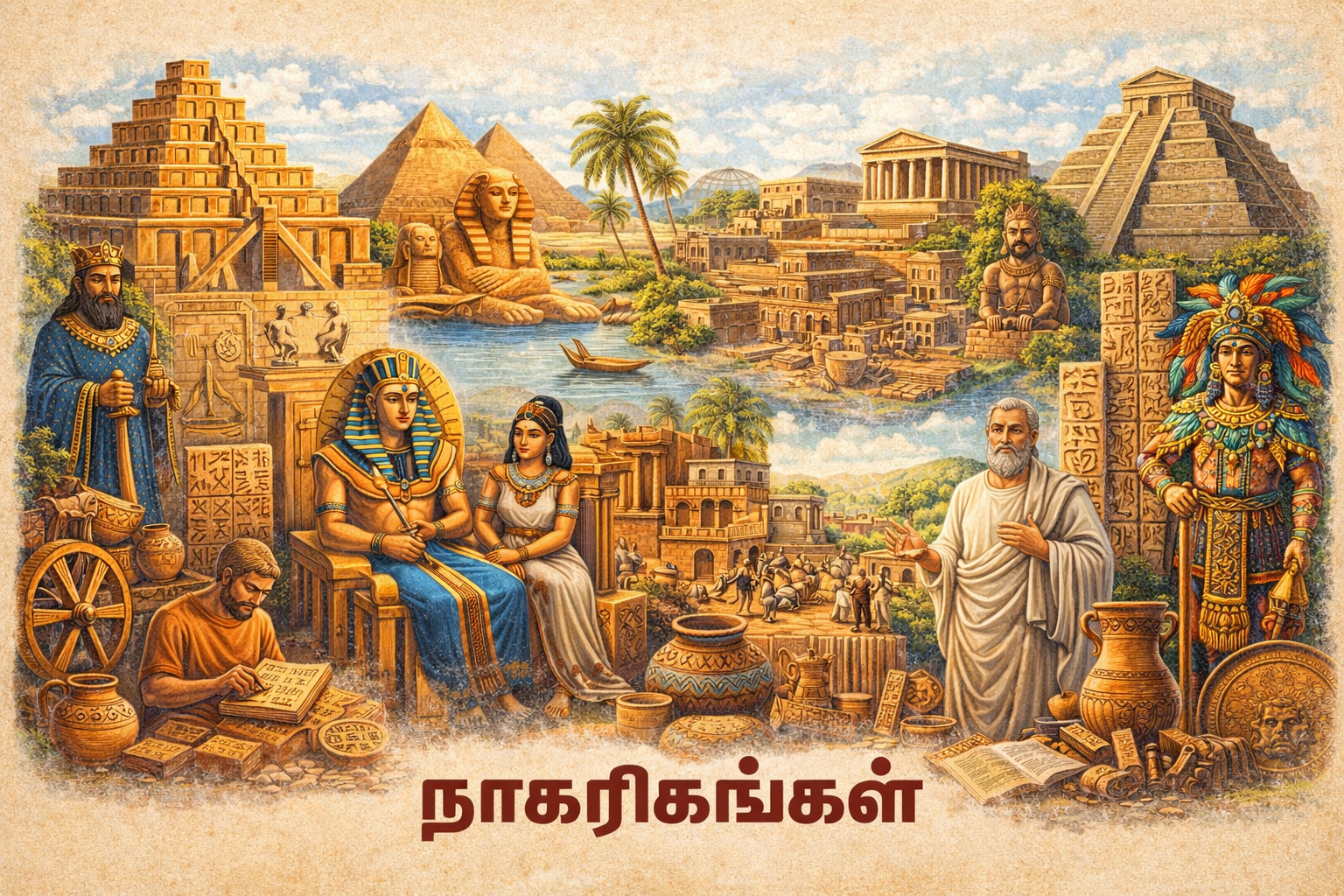
நாகரிகங்கள்
🏛️ சிந்து சமவெளி நாகரிகம் (Indus Valley Civilization) – முழு விளக்கம்
சிந்து சமவெளி நாகரிகம் (Indus Valley Civilization) உலகின் மிகப் பழமையான நாகரிகங்களில் ஒன்றாகும். இது கிமு 3300 முதல் 1300 வரை இந்தியா மற்றும் பாகிஸ்தான் பகுதிகளில் வளர்ச்சி பெற்றது.
📍 இருப்பிடம்
- ✔ சிந்து நதி (Indus River) கரைகள்
- ✔ இன்றைய இந்தியா, பாகிஸ்தான் பகுதிகள்
🏙️ முக்கிய நகரங்கள்
- ✔ ஹரப்பா (Harappa)
- ✔ மொகஞ்சோதாரோ (Mohenjo-Daro)
- ✔ லோதல் (Lothal)
- ✔ காளிபங்கன் (Kalibangan)
🏗️ நகர அமைப்பு
- ✔ திட்டமிட்ட நகரங்கள் (Planned cities)
- ✔ சீரான வீதிகள்
- ✔ வடிகால் அமைப்பு (Drainage system)
- ✔ எரித்த செங்கற்கள் (Burnt bricks)
🚿 கழிவுநீர் வடிகால் அமைப்பு
இந்த நாகரிகத்தின் முக்கிய சிறப்பு மேம்பட்ட கழிவுநீர் வடிகால் அமைப்பாகும். வீடுகளில் இருந்து வெளியேறும் நீர் தெருக்களில் உள்ள வடிகால்கள் மூலம் வெளியேற்றப்பட்டது.
🧑🌾 பொருளாதாரம்
- ✔ வேளாண்மை (Agriculture)
- ✔ வர்த்தகம் (Trade)
- ✔ கைத்தொழில் (Crafts)
🛕 மதம் மற்றும் பண்பாடு
- ✔ தாய்தெய்வம் (Mother Goddess) வழிபாடு
- ✔ சிவன் போன்ற உருவங்கள்
- ✔ முத்திரைகள் (Seals)
🧾 எழுத்து முறை
சிந்து எழுத்து (Indus Script) இன்னும் முழுமையாக புரியப்படவில்லை. இது குறியீட்டு வடிவில் இருந்தது.
⚠️ நாகரிக வீழ்ச்சி காரணங்கள்
- ✔ வெள்ளப்பெருக்கு (Floods)
- ✔ காலநிலை மாற்றம்
- ✔ நதியின் திசை மாற்றம்
முக்கிய குறிப்புகள் (TNPSC):
- ✔ காலம்: கிமு 3300 – 1300
- ✔ முக்கிய நகரம்: Mohenjo-Daro
- ✔ சிறப்பு: Drainage system
- ✔ Script: Undeciphered
TNPSC தேர்வுகளில் “Harappa எங்கு?”, “Drainage system?”, “Indus script?” போன்ற கேள்விகள் இந்தத் தலைப்பிலிருந்து அடிக்கடி கேட்கப்படுகின்றன.
ஆகையால், சிந்து சமவெளி நாகரிகம் வரலாற்றில் மிகவும் முக்கியமான தலைப்பாகும்.
📜 வேத நாகரிகம் (Vedic Civilization) – முழு விளக்கம்
வேத நாகரிகம் (Vedic Civilization) என்பது சிந்து சமவெளி நாகரிகத்திற்கு பிந்தைய காலத்தில் இந்தியாவில் உருவான முக்கியமான நாகரிகமாகும். இது வேதங்கள் (Vedas) அடிப்படையாகக் கொண்டு அமைந்தது.
📅 காலப்பிரிவு
- ✔ ஆரம்ப வேத காலம் (Early Vedic Period): கிமு 1500 – 1000
- ✔ பிந்தைய வேத காலம் (Later Vedic Period): கிமு 1000 – 600
📍 இருப்பிடம்
- ✔ சப்த சிந்து பகுதி (Punjab region)
- ✔ பின்னர் கங்கை சமவெளி
📖 வேதங்கள்
- ✔ ரிக் வேதம் (Rig Veda)
- ✔ யஜுர் வேதம் (Yajur Veda)
- ✔ சாம வேதம் (Sama Veda)
- ✔ அதர்வ வேதம் (Atharva Veda)
👨👩👧 சமூக அமைப்பு
- ✔ வர்ண அமைப்பு (Varna System)
- ✔ பிராமணர், க்ஷத்திரியர், வைசியர், சூத்திரர்
👑 அரசியல் அமைப்பு
- ✔ மன்னர் (King)
- ✔ சபா மற்றும் சமிதி (Sabha & Samiti)
🧑🌾 பொருளாதாரம்
- ✔ வேளாண்மை (Agriculture)
- ✔ கால்நடை வளர்ப்பு (Cattle rearing)
- ✔ பரிமாற்ற வர்த்தகம் (Barter system)
🛕 மதம் மற்றும் நம்பிக்கை
- ✔ இயற்கை தெய்வங்கள் (Natural gods)
- ✔ இந்திரன், அக்னி, வருணன்
- ✔ யாகங்கள் (Yajnas)
📚 கல்வி
- ✔ குருகுலம் (Gurukul system)
- ✔ வாய்மொழி பரம்பரை (Oral tradition)
⚠️ முக்கிய மாற்றங்கள் (Later Vedic)
- ✔ விவசாயம் அதிகரிப்பு
- ✔ வர்ண அமைப்பு வலுவடைதல்
- ✔ ராஜ்யங்கள் உருவாகுதல்
முக்கிய குறிப்புகள் (TNPSC):
- ✔ 4 வேதங்கள் முக்கியம்
- ✔ Varna system
- ✔ Sabha & Samiti
- ✔ Natural gods worship
TNPSC தேர்வுகளில் “Rig Veda என்ன?”, “Varna system?”, “Sabha என்ன?” போன்ற கேள்விகள் இந்தத் தலைப்பிலிருந்து அடிக்கடி கேட்கப்படுகின்றன.
ஆகையால், வேத நாகரிகம் இந்திய வரலாற்றில் மிகவும் முக்கியமான தலைப்பாகும்.
📜 சங்க காலம் (Sangam Age) – முழு விளக்கம்
சங்க காலம் என்பது தமிழர் வரலாற்றின் பொற்காலமாகக் கருதப்படுகிறது. இது கிமு 300 முதல் கிபி 300 வரை தென்னிந்தியாவில் வளர்ச்சி பெற்றது. இந்த காலத்தில் தமிழ் இலக்கியம், கலாசாரம் மற்றும் அரசியல் மிகுந்த வளர்ச்சி பெற்றன.
📚 சங்கங்கள் (Sangams)
தமிழ் அறிஞர்கள் கூடி தமிழ் இலக்கியங்களை உருவாக்கிய இடம் சங்கம் எனப்படுகிறது.
- ✔ முதல் சங்கம் – மதுரை
- ✔ இரண்டாம் சங்கம் – கபாடபுரம்
- ✔ மூன்றாம் சங்கம் – மதுரை
📖 சங்க இலக்கியங்கள்
- ✔ எட்டுத்தொகை (Ettuthokai)
- ✔ பத்துப்பாட்டு (Pathupattu)
👑 அரசியல் அமைப்பு
- ✔ மூவேந்தர்கள் (Three Kingdoms)
- ✔ சேரர் (Chera)
- ✔ சோழர் (Chola)
- ✔ பாண்டியர் (Pandya)
🏙️ சமூக வாழ்க்கை
- ✔ மக்கள் இயற்கையோடு இணைந்து வாழ்ந்தனர்
- ✔ ஐந்திணை வாழ்க்கை (Kurinji, Mullai, Marutham, Neithal, Palai)
🧑🌾 பொருளாதாரம்
- ✔ வேளாண்மை (Agriculture)
- ✔ கடல் வர்த்தகம் (Sea trade)
- ✔ உப்பு, முத்து வர்த்தகம்
🛕 மதம் மற்றும் பண்பாடு
- ✔ முருகன், மாயோன், கோற்றவை வழிபாடு
- ✔ வீர மரபு (Hero worship)
⚔️ போரியல்
- ✔ வீரர்களை மதித்தனர்
- ✔ நடுகல் (Hero stones)
📊 முக்கிய அம்சங்கள்
- ✔ தமிழ் மொழி வளர்ச்சி
- ✔ இலக்கியங்கள் அதிகம்
- ✔ சமூக அமைப்பு தெளிவு
முக்கிய குறிப்புகள் (TNPSC):
- ✔ காலம்: கிமு 300 – கிபி 300
- ✔ மூவேந்தர்கள்
- ✔ எட்டுத்தொகை, பத்துப்பாட்டு
- ✔ ஐந்திணை வாழ்க்கை
TNPSC தேர்வுகளில் “மூவேந்தர்கள் யார்?”, “ஐந்திணை என்ன?”, “சங்க இலக்கியங்கள் என்ன?” போன்ற கேள்விகள் இந்தத் தலைப்பிலிருந்து அடிக்கடி கேட்கப்படுகின்றன.
ஆகையால், சங்க காலம் தமிழர் வரலாற்றில் மிகவும் முக்கியமான தலைப்பாகும்.
மக்கள் கேட்கும் கேள்விகள்
உங்களுக்கான முக்கிய பதில்கள்
கிமு 2500 – 1900 காலப்பகுதி
ஹரப்பா, மொஹெஞ்சோதாரோ
திட்டமிட்ட நகர அமைப்பு மற்றும் வடிகால் முறை
ரிக் வேதம், யஜுர் வேதம், சாம வேதம், அதர்வ வேதம்
வர்ண அமைப்பு (பிராமணர், க்ஷத்திரியர், வைசியர், சூத்திரர்)
கிமு 300 – கிபி 300
சேரர், சோழர், பாண்டியர்
பூம்புகார்
அகப்பொருள் மற்றும் புறப்பொருள்
ரோமர்கள் உடன் வணிகம் நடைபெற்றது.