தலைப்பு
இந்திய பொருளாதாரம்
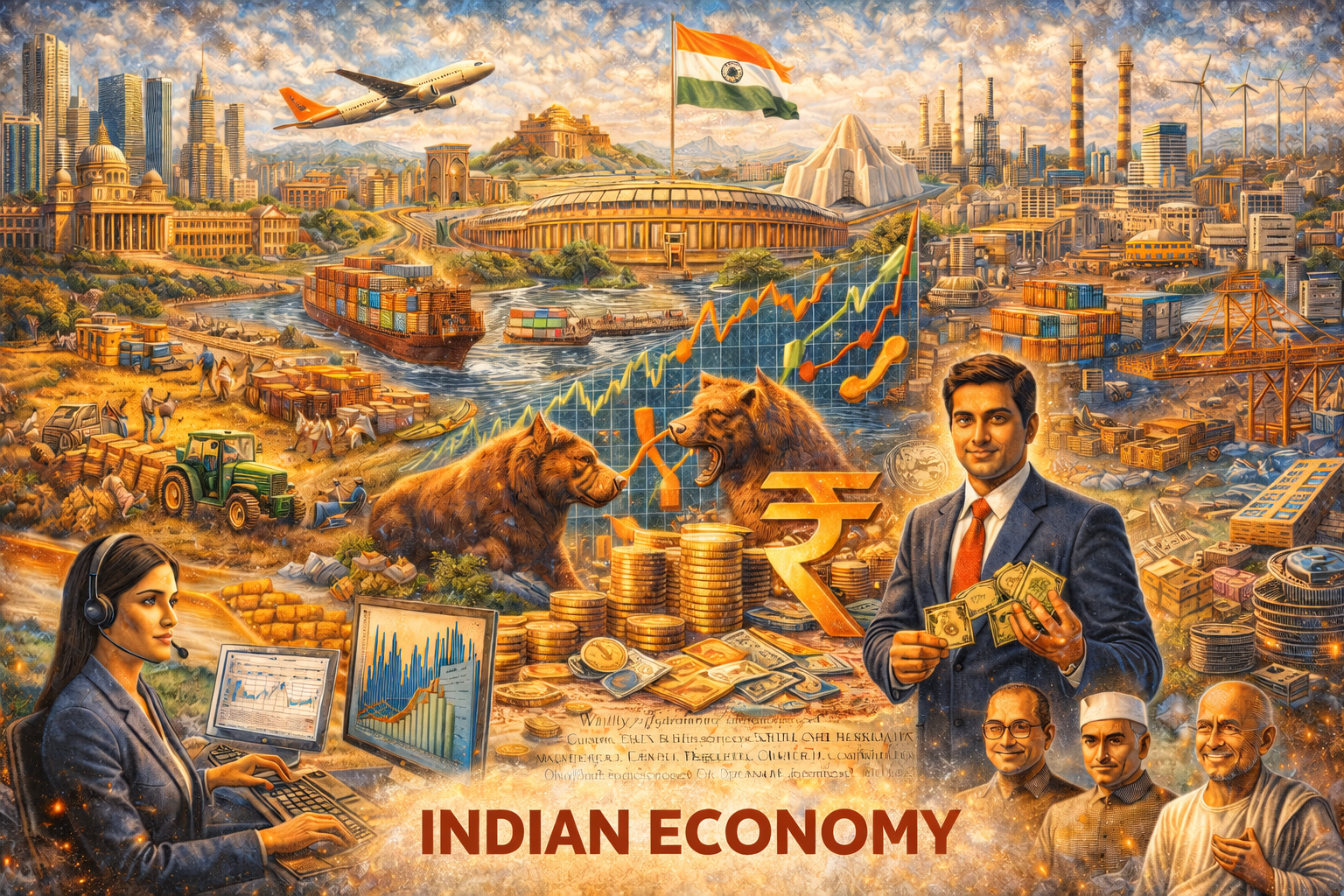
📊 இந்திய பொருளாதாரம் (Indian Economy) – முழு விளக்கம்
இந்திய பொருளாதாரம் என்பது நாட்டில் நடைபெறும் பொருட்கள் மற்றும் சேவைகளின் உற்பத்தி, விநியோகம் மற்றும் நுகர்வு ஆகியவற்றை குறிக்கிறது. இந்தியா உலகின் மிகப்பெரிய வளர்ந்து வரும் பொருளாதாரங்களில் ஒன்றாகும்.
📅 வரலாறு (History)
- ✔ 1947 – சுதந்திரத்திற்குப் பிறகு திட்டமிட்ட பொருளாதாரம்
- ✔ 1951 – முதல் ஐந்தாண்டுத் திட்டம் (Five Year Plan)
- ✔ 1991 – பொருளாதார சீர்திருத்தங்கள் (Liberalization)
🏗️ பொருளாதார வகை
- ✔ கலப்பு பொருளாதாரம் (Mixed Economy)
- ✔ அரசு + தனியார் இணைந்து செயல்படும் அமைப்பு
🧩 பொருளாதார துறைகள் (Sectors)
1️⃣ முதன்மை துறை (Primary Sector)
- ✔ விவசாயம் (Agriculture)
- ✔ மீன்பிடி (Fishing)
- ✔ சுரங்கம் (Mining)
2️⃣ இரண்டாம் துறை (Secondary Sector)
- ✔ தொழிற்சாலைகள் (Industries)
- ✔ உற்பத்தி (Manufacturing)
3️⃣ மூன்றாம் துறை (Tertiary Sector)
- ✔ சேவை துறை (Service Sector)
- ✔ வங்கி, IT, சுற்றுலா
📈 GDP (மொத்த உள்நாட்டு உற்பத்தி)
ஒரு நாட்டில் ஒரு ஆண்டில் உற்பத்தி செய்யப்படும் அனைத்து பொருட்கள் மற்றும் சேவைகளின் மொத்த மதிப்பு GDP எனப்படும். இது பொருளாதார வளர்ச்சியை அளக்கும் முக்கியமான அளவுகோல்.
💰 முக்கிய அம்சங்கள்
- ✔ விவசாயம் முக்கிய பங்கு வகிக்கிறது
- ✔ IT துறை வேகமாக வளர்கிறது
- ✔ மக்கள் தொகை அதிகம் → பெரிய வேலைவாய்ப்பு சந்தை
- ✔ Startup culture வளர்ச்சி
⚠️ சவால்கள் (Challenges)
- ✔ வேலைவாய்ப்பு குறைவு (Unemployment)
- ✔ வறுமை (Poverty)
- ✔ விலை உயர்வு (Inflation)
- ✔ கல்வி மற்றும் சுகாதார சிக்கல்கள்
🚀 அரசு திட்டங்கள்
- ✔ Make in India
- ✔ Digital India
- ✔ Startup India
- ✔ Skill India
🏦 முக்கிய நிறுவனங்கள்
- ✔ RBI (Reserve Bank of India)
- ✔ NITI Aayog
- ✔ Ministry of Finance
🌏 முக்கியத்துவம்
- ✔ நாட்டின் வளர்ச்சியை தீர்மானிக்கிறது
- ✔ வேலைவாய்ப்பை உருவாக்குகிறது
- ✔ மக்களின் வாழ்க்கை தரத்தை உயர்த்துகிறது
முக்கிய குறிப்புகள் (TNPSC):
- ✔ 1991 – Liberalization
- ✔ Mixed Economy
- ✔ 3 Sectors – Primary, Secondary, Tertiary
- ✔ GDP – Growth Indicator
TNPSC தேர்வுகளில் “GDP என்றால் என்ன?”, “1991 reforms என்ன?”, “Primary sector என்ன?” போன்ற கேள்விகள் இந்தத் தலைப்பிலிருந்து அடிக்கடி கேட்கப்படுகின்றன.
ஆகையால், இந்திய பொருளாதாரம் பொதுஅறிவியல் மற்றும் பொருளாதாரப் பாடங்களில் மிகவும் முக்கியமான தலைப்பாகும்.
🇮🇳 இந்திய பொருளாதாரத்தின் இயல்புகள் (Features of Indian Economy)
இந்திய பொருளாதாரம் பல்வேறு தனித்துவமான அம்சங்களைக் கொண்டுள்ளது. இது வளர்ந்து வரும் பொருளாதாரமாக இருந்து, விவசாயம், தொழில் மற்றும் சேவை துறைகளின் இணைப்பால் இயங்குகிறது.
🌱 1. விவசாய ஆதார பொருளாதாரம்
- ✔ இந்தியாவில் மக்கள் தொகையில் பெரும்பாலானோர் விவசாயத்தில் ஈடுபட்டுள்ளனர்
- ✔ உணவுத் தேவையை பூர்த்தி செய்ய முக்கிய பங்கு
🏭 2. கலப்பு பொருளாதாரம் (Mixed Economy)
- ✔ அரசு மற்றும் தனியார் துறைகள் இணைந்து செயல்படுகின்றன
- ✔ Public + Private sectors இரண்டும் முக்கியம்
👨👩👧👦 3. மக்கள் தொகை அதிகம்
- ✔ இந்தியா உலகின் அதிக மக்கள் தொகை கொண்ட நாடுகளில் ஒன்று
- ✔ வேலைவாய்ப்பு மற்றும் வளவளர்ச்சி சவால்கள்
💼 4. வேலைவாய்ப்பு சிக்கல்
- ✔ வேலைஇல்லாமை (Unemployment) ஒரு முக்கிய பிரச்சினை
- ✔ மறைமுக வேலைவாய்ப்பு (Disguised unemployment) உள்ளது
📊 5. குறைந்த வருமானம் (Low Per Capita Income)
- ✔ ஒருவருக்கு கிடைக்கும் வருமானம் குறைவாக உள்ளது
- ✔ வாழ்க்கைத் தரம் எல்லா இடங்களிலும் சமமில்லை
🏙️ 6. நகரம் – கிராமம் வேறுபாடு
- ✔ நகரங்களில் வளர்ச்சி அதிகம்
- ✔ கிராமப்புறங்களில் வசதிகள் குறைவு
🏢 7. சேவை துறை வளர்ச்சி
- ✔ IT, Banking, Education துறைகள் வேகமாக வளர்கின்றன
- ✔ GDP-ல் அதிக பங்கு சேவை துறைக்கு உள்ளது
⚖️ 8. பொருளாதார சமமின்மை (Inequality)
- ✔ பணக்காரர் – ஏழை இடைவெளி அதிகம்
- ✔ வருமான விநியோகம் சமமில்லை
🌍 9. உலக பொருளாதாரத்துடன் இணைப்பு
- ✔ Globalization காரணமாக உலக சந்தையுடன் இணைந்துள்ளது
- ✔ Export & Import அதிகரித்துள்ளது
🚀 10. வளர்ச்சி பாதையில் உள்ள பொருளாதாரம்
- ✔ Developing Economy
- ✔ பல துறைகளில் முன்னேற்றம்
முக்கிய குறிப்புகள் (TNPSC):
- ✔ Agriculture-based economy
- ✔ Mixed Economy
- ✔ Low per capita income
- ✔ Unemployment + Inequality
- ✔ Service sector growth
TNPSC தேர்வுகளில் “இந்திய பொருளாதாரத்தின் இயல்புகள் என்ன?” என்ற கேள்வி 5 அல்லது 10 மதிப்பெண் கேள்வியாக அடிக்கடி கேட்கப்படுகிறது.
ஆகையால், இந்த அம்சங்களை புள்ளிவிவரமாக (points) தெளிவாக படித்தால் தேர்வில் எளிதாக எழுதலாம்.
🏭 கலப்பு பொருளாதாரம் (Mixed Economy) – முழு விளக்கம்
கலப்பு பொருளாதாரம் என்பது அரசு (Public Sector) மற்றும் தனியார் (Private Sector) இரண்டும் இணைந்து செயல்படும் பொருளாதார அமைப்பாகும். இந்தியா ஒரு சிறந்த கலப்பு பொருளாதார நாட்டாகும்.
📌 வரையறை (Definition)
ஒரு நாட்டில் அரசு மற்றும் தனியார் துறைகள் இரண்டும் பொருளாதார நடவடிக்கைகளில் பங்கு பெறும் அமைப்பே கலப்பு பொருளாதாரம் ஆகும்.
⚖️ முக்கிய அம்சங்கள் (Features)
- ✔ அரசு + தனியார் இணைந்து செயல்படுதல்
- ✔ இரு துறைகளுக்கும் சம முக்கியத்துவம்
- ✔ மக்கள் நலன் + லாப நோக்கம் இரண்டும் சேர்ந்து இருக்கும்
- ✔ கட்டுப்படுத்தப்பட்ட சந்தை அமைப்பு (Controlled Market)
🏛️ அரசு துறை (Public Sector)
- ✔ முக்கிய வளங்கள் மற்றும் சேவைகளை அரசு நிர்வகிக்கும்
- ✔ மக்கள் நலனுக்காக செயல்படும்
- ✔ உதாரணம்: ரயில்வே, பாதுகாப்பு, மின்சாரம்
🏢 தனியார் துறை (Private Sector)
- ✔ தனிநபர்கள் அல்லது நிறுவனங்கள் நடத்தும்
- ✔ லாப நோக்கம் முக்கியம்
- ✔ உதாரணம்: IT நிறுவனங்கள், தொழிற்சாலைகள்
🔄 இந்தியாவில் கலப்பு பொருளாதாரம்
- ✔ 1947க்குப் பிறகு இந்தியா கலப்பு பொருளாதாரத்தைத் தேர்ந்தெடுத்தது
- ✔ 1991 சீர்திருத்தங்களுக்குப் பிறகு தனியார் துறை வளர்ச்சி அதிகரித்தது
✅ நன்மைகள் (Advantages)
- ✔ பொருளாதார சமநிலை ஏற்படும்
- ✔ மக்கள் நலன் பாதுகாக்கப்படும்
- ✔ தனியார் துறையால் வேகமான வளர்ச்சி
- ✔ வேலைவாய்ப்பு அதிகரிக்கும்
❌ குறைபாடுகள் (Disadvantages)
- ✔ அரசு துறையில் செயல்திறன் குறைவு இருக்கலாம்
- ✔ தனியார் துறையில் லாப நோக்கம் அதிகம்
- ✔ சமமின்மை ஏற்படும் வாய்ப்பு
🌏 முக்கியத்துவம்
- ✔ பொருளாதார வளர்ச்சிக்கு முக்கிய அமைப்பு
- ✔ சமூக நலனையும் வளர்ச்சியையும் இணைக்கிறது
- ✔ இந்தியாவின் பொருளாதார அடித்தளம்
முக்கிய குறிப்புகள் (TNPSC):
- ✔ Mixed Economy = Public + Private
- ✔ India follows Mixed Economy
- ✔ 1991 – Liberalization boost
- ✔ Welfare + Profit system
TNPSC தேர்வுகளில் “கலப்பு பொருளாதாரம் என்றால் என்ன?”, “அதன் அம்சங்கள் என்ன?” போன்ற கேள்விகள் அடிக்கடி கேட்கப்படுகின்றன.
📈 வளரும் பொருளாதாரம் (Developing Economy) – முழு விளக்கம்
வளரும் பொருளாதாரம் என்பது இன்னும் முழுமையாக முன்னேறாத நிலையில் இருந்தாலும் வளர்ச்சி பாதையில் இருக்கும் பொருளாதாரத்தை குறிக்கிறது. இந்தியா ஒரு முக்கியமான வளரும் பொருளாதார நாடு ஆகும்.
📌 வரையறை (Definition)
தொழில், வருமானம், கல்வி, வாழ்க்கைத் தரம் போன்ற துறைகளில் முன்னேற்றம் அடைந்து கொண்டிருக்கும் பொருளாதார அமைப்பே வளரும் பொருளாதாரம் ஆகும்.
⚖️ முக்கிய அம்சங்கள் (Features)
- ✔ குறைந்த ஒருவருக்கு வருமானம் (Low Per Capita Income)
- ✔ விவசாயம் அதிக பங்கு வகிக்கும்
- ✔ வேலைவாய்ப்பு சிக்கல்கள்
- ✔ தொழில்மயமாக்கல் (Industrialization) வளர்ச்சி நிலையில்
- ✔ நகரம் – கிராமம் வேறுபாடு
- ✔ கல்வி மற்றும் சுகாதாரத்தில் முன்னேற்றம் தேவை
🌱 இந்தியா – ஒரு வளரும் பொருளாதாரம்
- ✔ IT மற்றும் சேவை துறைகள் வேகமாக வளர்கின்றன
- ✔ Startups மற்றும் Digital Economy வளர்ச்சி
- ✔ அரசு திட்டங்கள் மூலம் முன்னேற்றம்
🚀 வளர்ச்சிக்கான காரணங்கள்
- ✔ தொழில்நுட்ப வளர்ச்சி (Technology Growth)
- ✔ கல்வி மேம்பாடு
- ✔ முதலீடுகள் (Investments)
- ✔ அரசு சீர்திருத்தங்கள்
⚠️ சவால்கள் (Challenges)
- ✔ வறுமை (Poverty)
- ✔ வேலைஇல்லாமை (Unemployment)
- ✔ மக்கள் தொகை அழுத்தம்
- ✔ பொருளாதார சமமின்மை
🌏 முக்கியத்துவம்
- ✔ வளர்ச்சி வாய்ப்பு அதிகம்
- ✔ உலக பொருளாதாரத்தில் முக்கிய இடம் பெறுகிறது
- ✔ எதிர்காலத்தில் முன்னேற்ற நாடாக மாறும் வாய்ப்பு
முக்கிய குறிப்புகள் (TNPSC):
- ✔ India = Developing Economy
- ✔ Low per capita income
- ✔ Agriculture dominance
- ✔ Industrial growth in progress
- ✔ Poverty + Unemployment
TNPSC தேர்வுகளில் “வளரும் பொருளாதாரம் என்றால் என்ன?”, “அதன் அம்சங்கள் என்ன?” போன்ற கேள்விகள் அடிக்கடி கேட்கப்படுகின்றன.
👨👩👧👦 மக்கள் தொகை & 💼 வேலைஇல்லாமை – முழு விளக்கம்
மக்கள் தொகை (Population) மற்றும் வேலைஇல்லாமை (Unemployment) ஆகியவை இந்திய பொருளாதாரத்தின் முக்கிய அம்சங்களாகும். மக்கள் தொகை அதிகரிப்பு மற்றும் வேலை வாய்ப்பு குறைவு பொருளாதார வளர்ச்சியை நேரடியாக பாதிக்கின்றன.
👨👩👧👦 மக்கள் தொகை (Population)
📌 வரையறை
ஒரு நாட்டில் வாழும் மொத்த மக்களின் எண்ணிக்கையே மக்கள் தொகை ஆகும்.
⚖️ அம்சங்கள்
- ✔ இந்தியா உலகின் அதிக மக்கள் தொகை கொண்ட நாடுகளில் ஒன்று
- ✔ இளைஞர்கள் அதிகம் (Youth Population)
- ✔ வேலைவாய்ப்பு தேவைகள் அதிகரிப்பு
✅ நன்மைகள்
- ✔ பெரிய வேலைவாய்ப்பு வளம் (Labour Force)
- ✔ பொருளாதார வளர்ச்சிக்கு உதவும்
❌ குறைபாடுகள்
- ✔ வளங்கள் மீது அழுத்தம்
- ✔ வேலைவாய்ப்பு பற்றாக்குறை
- ✔ வறுமை அதிகரிப்பு
💼 வேலைஇல்லாமை (Unemployment)
📌 வரையறை
வேலை செய்யத் தயாராகவும் திறனும் இருந்தும் வேலை கிடைக்காத நிலையே வேலைஇல்லாமை ஆகும்.
⚖️ வேலைஇல்லாமையின் வகைகள்
- ✔ திறந்த வேலைஇல்லாமை (Open Unemployment)
- ✔ மறைமுக வேலைஇல்லாமை (Disguised Unemployment)
- ✔ பருவ வேலைஇல்லாமை (Seasonal Unemployment)
- ✔ கல்வியறிவு வேலைஇல்லாமை (Educated Unemployment)
⚠️ காரணங்கள்
- ✔ மக்கள் தொகை அதிகரிப்பு
- ✔ தொழில்மயமாக்கல் குறைவு
- ✔ கல்வி மற்றும் திறன் இடைவெளி
- ✔ விவசாயத்தில் அதிக நம்பிக்கை
🚀 தீர்வுகள்
- ✔ Skill Development
- ✔ புதிய தொழில்கள் உருவாக்கம்
- ✔ Startup ஊக்குவிப்பு
- ✔ அரசு வேலை வாய்ப்பு திட்டங்கள்
🔗 மக்கள் தொகை & வேலைஇல்லாமை – தொடர்பு
- ✔ மக்கள் தொகை அதிகரிப்பு → வேலை தேவை அதிகரிப்பு
- ✔ வேலை வாய்ப்பு குறைவு → வேலைஇல்லாமை அதிகரிப்பு
- ✔ பொருளாதார வளர்ச்சிக்கு தடையாகிறது
முக்கிய குறிப்புகள் (TNPSC):
- ✔ Population = Total people
- ✔ Unemployment = No job
- ✔ Types: Open, Disguised, Seasonal
- ✔ Cause: Population growth
TNPSC தேர்வுகளில் “வேலைஇல்லாமை என்றால் என்ன?”, “அதன் வகைகள் என்ன?”, “மக்கள் தொகை மற்றும் வேலைஇல்லாமை தொடர்பு என்ன?” போன்ற கேள்விகள் அடிக்கடி கேட்கப்படுகின்றன.
📊 GDP & தேசிய வருமானம் (National Income) – முழு விளக்கம்
GDP (Gross Domestic Product) மற்றும் தேசிய வருமானம் (National Income) ஆகியவை ஒரு நாட்டின் பொருளாதார வளர்ச்சியை அளவிடும் முக்கியமான அளவுகோல்கள் ஆகும்.
📈 GDP (மொத்த உள்நாட்டு உற்பத்தி)
📌 வரையறை
ஒரு நாட்டின் எல்லைக்குள் ஒரு ஆண்டில் உற்பத்தி செய்யப்படும் அனைத்து இறுதி பொருட்கள் மற்றும் சேவைகளின் மொத்த மதிப்பு GDP எனப்படுகிறது.
⚖️ அம்சங்கள்
- ✔ நாட்டின் பொருளாதார வளர்ச்சியை அளக்கும் முக்கிய அளவுகோல்
- ✔ ஒரு ஆண்டிற்கான உற்பத்தி மதிப்பை காட்டும்
- ✔ உள்நாட்டு உற்பத்தியை மட்டும் கணக்கிடும்
🧮 கணக்கிடும் முறைகள்
- ✔ உற்பத்தி முறை (Production Method)
- ✔ வருமான முறை (Income Method)
- ✔ செலவு முறை (Expenditure Method)
💡 செலவு முறையின் சூத்திரம்
GDP = C + I + G + (X - M)
- C = Consumption (நுகர்வு)
- I = Investment (முதலீடு)
- G = Government Spending (அரசு செலவு)
- X - M = Export - Import (ஏற்றுமதி - இறக்குமதி)
💰 தேசிய வருமானம் (National Income)
📌 வரையறை
ஒரு நாட்டின் குடிமக்கள் ஒரு ஆண்டில் சம்பாதிக்கும் மொத்த வருமானமே தேசிய வருமானம் ஆகும்.
⚖️ அம்சங்கள்
- ✔ ஊதியம், வட்டி, வாடகை, லாபம் ஆகியவை சேர்க்கப்படும்
- ✔ நாட்டின் மக்களின் வருமானத்தை காட்டும்
📊 தேசிய வருமான வகைகள்
- ✔ GNP (Gross National Product)
- ✔ NNP (Net National Product)
- ✔ Per Capita Income
🔗 GDP & தேசிய வருமானம் – வித்தியாசம்
- ✔ GDP → நாட்டுக்குள் உற்பத்தி
- ✔ National Income → குடிமக்களின் வருமானம்
- ✔ GDP → இடம் (Location based)
- ✔ NI → நபர் (People based)
🌏 முக்கியத்துவம்
- ✔ பொருளாதார வளர்ச்சியை அறிய உதவும்
- ✔ அரசு திட்டங்களை திட்டமிட உதவும்
- ✔ வாழ்க்கைத் தரத்தை மதிப்பிட உதவும்
முக்கிய குறிப்புகள் (TNPSC):
- ✔ GDP = Total production (within country)
- ✔ NI = Total income of people
- ✔ Formula: C + I + G + (X - M)
- ✔ Per Capita Income = NI / Population
TNPSC தேர்வுகளில் “GDP என்றால் என்ன?”, “National Income என்ன?”, “GDP formula என்ன?” போன்ற கேள்விகள் அடிக்கடி கேட்கப்படுகின்றன.
மக்கள் கேட்கும் கேள்விகள்
உங்களுக்கான முக்கிய பதில்கள்
இந்தியாவின் உற்பத்தி, விநியோகம், நுகர்வு ஆகிய பொருளாதார செயல்பாடுகளின் அமைப்பு.
இந்திய ரிசர்வ் வங்கி (RBI)
ஒரு நாட்டில் ஒரு ஆண்டில் உற்பத்தி செய்யப்பட்ட மொத்த பொருட்கள் மற்றும் சேவைகளின் மதிப்பு.
வேளாண்மை (Agriculture)
பொருட்களின் விலை தொடர்ந்து அதிகரிக்கும் நிலை.
2015ல் NITI Aayog ஆக மாற்றப்பட்டது.
இந்தியாவின் கொள்கை அமைக்கும் நிறுவனம்.
1969
வேளாண்மை துறை
அரசாங்கம் மக்களிடமிருந்து வசூலிக்கும் கட்டணம்.