தலைப்பு
தனிமங்கள்
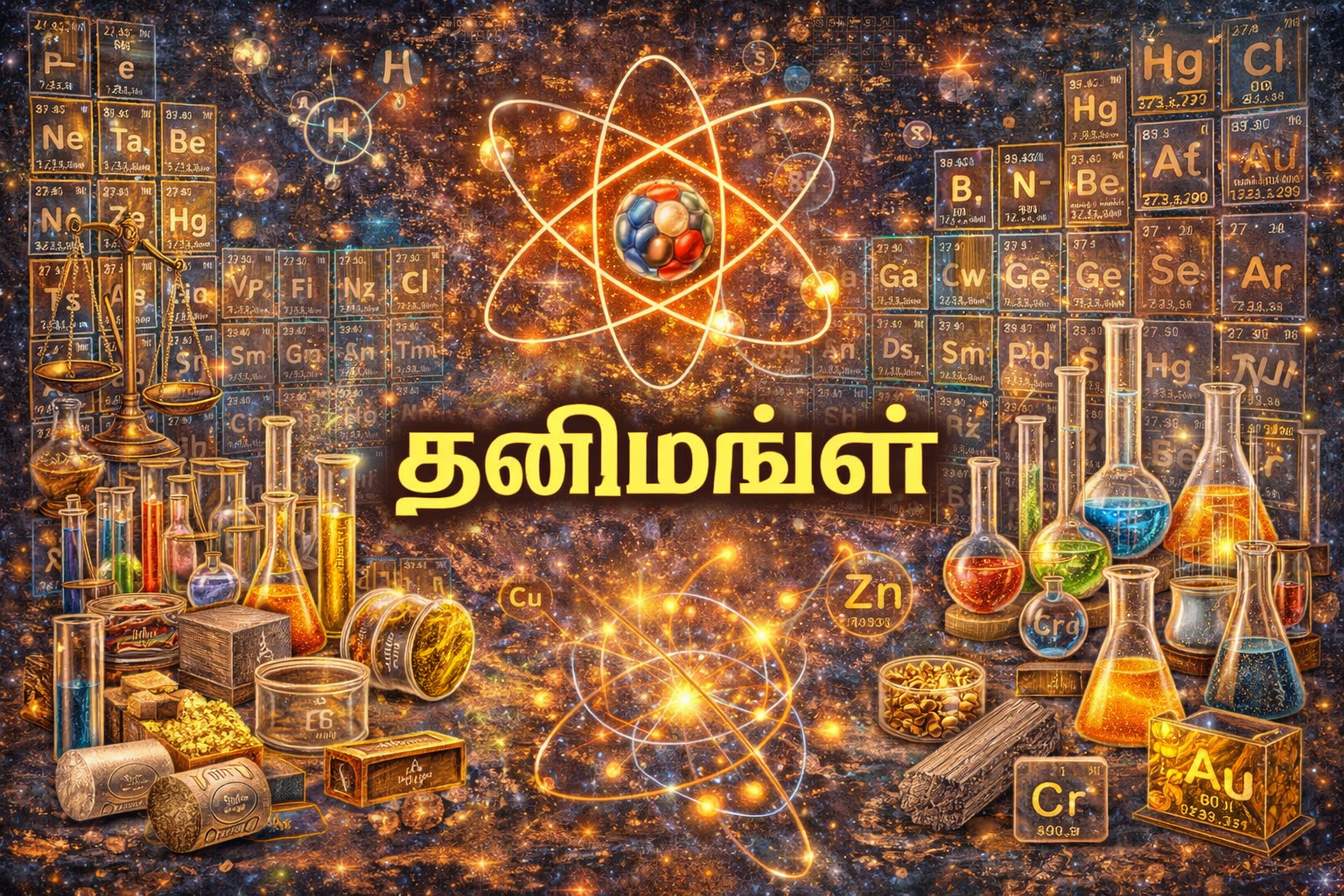
🧪 தனிமங்கள் (Thanimangal / Elements) – முழு விளக்கம்
தனிமங்கள் (Elements) என்பது ஒரே வகையான அணுக்களால் (Atoms) மட்டும் உருவான தூய பொருள்களாகும். இவை வேறு எளிய பொருள்களாக வேதியியல் முறையில் பிரிக்க முடியாது.
📘 தனிமத்தின் வரையறை
ஒரே வகையான அணுக்களால் ஆன மற்றும் மேலும் எளிய பொருள்களாக பிரிக்க முடியாத பொருள் தனிமம் எனப்படுகிறது.
🔬 அணு (Atom)
அணு என்பது தனிமத்தின் மிகச் சிறிய அலகாகும். ஒவ்வொரு தனிமத்திற்கும் தனித்துவமான அணுக்கள் உள்ளன.
⚡ தனிமங்களின் வகைகள்
1. உலோகங்கள் (Metals)
- ✔ மின்சாரம் மற்றும் வெப்பத்தை கடத்தும்
- ✔ ஒளிரும் தன்மை
- ✔ உதாரணம்: இரும்பு, செம்பு, தங்கம்
2. அயலோகங்கள் (Non-Metals)
- ✔ மின்சாரம் கடத்தாது
- ✔ ஒளிராது
- ✔ உதாரணம்: ஆக்சிஜன், நைட்ரஜன்
3. இடைநிலைத் தனிமங்கள் (Metalloids)
- ✔ உலோகம் + அயலோகம் பண்புகள்
- ✔ உதாரணம்: சிலிகான்
🧪 தனிமங்கள் – பருவ அட்டவணை (Periodic Table) – முழு விளக்கம்
பருவ அட்டவணை (Periodic Table) என்பது அனைத்து தனிமங்களையும் (Elements) அவற்றின் அணு எண் (Atomic Number) அடிப்படையில் ஒழுங்குபடுத்தி காட்டும் அட்டவணையாகும்.
இந்த அட்டவணையை முதன்முதலில் உருவாக்கியவர் திமித்ரி மெண்டலீவ் (Dmitri Mendeleev) ஆவர். பின்னர் இது நவீன பருவ அட்டவணையாக (Modern Periodic Table) மாற்றப்பட்டது.
📊 பருவ அட்டவணையின் அமைப்பு
- ✔ வரிசைகள் → பருவங்கள் (Periods) – 7
- ✔ நெடுவரிசைகள் → குழுக்கள் (Groups) – 18
⚡ முக்கிய வகைப்பாடு
- ✔ உலோகங்கள் (Metals) – இடப்பக்கம்
- ✔ அயலோகங்கள் (Non-metals) – வலப்பக்கம்
- ✔ இடைநிலைத் தனிமங்கள் (Metalloids) – நடுப்பகுதி
🔬 முக்கிய குழுக்கள்
- ✔ குழு 1 – அல்கலி உலோகங்கள் (Alkali Metals)
- ✔ குழு 2 – அல்கலைன் எர்த் உலோகங்கள்
- ✔ குழு 17 – ஹாலஜன்கள் (Halogens)
- ✔ குழு 18 – நிர்வின வாயுக்கள் (Noble Gases)
📈 பருவ போக்குகள் (Trends)
- ✔ அணு அளவு (Atomic Size) → இடமிருந்து வலமாக குறையும்
- ✔ மின்விலக்கு (Electronegativity) → அதிகரிக்கும்
- ✔ உலோக தன்மை → கீழே செல்ல அதிகரிக்கும்
📋 சில முக்கிய தனிமங்கள்
| தனிமம் | அணு எண் | சின்னம் |
|---|---|---|
| ஹைட்ரஜன் | 1 | H |
| ஆக்சிஜன் | 8 | O |
| கார்பன் | 6 | C |
| சோடியம் | 11 | Na |
| இரும்பு | 26 | Fe |
முக்கிய குறிப்புகள் (TNPSC):
- ✔ 118 தனிமங்கள் உள்ளன
- ✔ 7 பருவங்கள், 18 குழுக்கள்
- ✔ Atomic number அடிப்படையில் அமைக்கப்பட்டது
- ✔ Mendeleev – Periodic Table
TNPSC தேர்வுகளில் “எத்தனை குழுக்கள்?”, “எத்தனை பருவங்கள்?”, “Mendeleev யார்?” போன்ற கேள்விகள் இந்தத் தலைப்பிலிருந்து அடிக்கடி கேட்கப்படுகின்றன.
ஆகையால், பருவ அட்டவணை வேதியியலில் மிகவும் முக்கியமான அடிப்படை தலைப்பாகும்.
⚗️ சேர்மங்கள் (Sermangal / Compounds) – முழு விளக்கம்
சேர்மங்கள் (Compounds) என்பது இரண்டு அல்லது அதற்கு மேற்பட்ட தனிமங்கள் (Elements) ஒரு நிலையான விகிதத்தில் (Fixed Ratio) வேதியியல் முறையில் இணைந்து உருவாகும் தூய பொருள்களாகும்.
📘 சேர்மத்தின் வரையறை
இரண்டு அல்லது அதற்கு மேற்பட்ட தனிமங்கள் வேதியியல் பிணைப்புகள் (Chemical Bonds) மூலம் இணைந்து, புதிய பண்புகளைக் கொண்ட பொருளாக உருவாகுவது சேர்மம் எனப்படுகிறது.
🔬 முக்கிய அம்சங்கள்
- ✔ நிரந்தர விகிதத்தில் உள்ளன
- ✔ தனிமங்களின் பண்புகள் மாறி புதிய பண்புகள் உருவாகும்
- ✔ வேதியியல் முறையில் மட்டுமே பிரிக்க முடியும்
🧪 எடுத்துக்காட்டுகள்
- ✔ தண்ணீர் (H₂O) – ஹைட்ரஜன் + ஆக்சிஜன்
- ✔ உப்பு (NaCl) – சோடியம் + குளோரின்
- ✔ கார்பன் டையாக்சைடு (CO₂)
⚡ சேர்மங்களின் வகைகள்
1. அயனிக் சேர்மங்கள் (Ionic Compounds)
- ✔ மின்னூட்டம் கொண்ட அயன்கள் மூலம் உருவாகும்
- ✔ உதா: NaCl
2. கூட்டிணை சேர்மங்கள் (Covalent Compounds)
- ✔ எலக்ட்ரான்களை பகிர்ந்து கொண்டு உருவாகும்
- ✔ உதா: H₂O
📊 சேர்மங்கள் vs கலவைகள்
| சேர்மங்கள் | கலவைகள் |
|---|---|
| நிரந்தர விகிதம் | மாறும் விகிதம் |
| வேதியியல் இணைப்பு | இயற்பியல் கலப்பு |
| பண்புகள் மாறும் | பண்புகள் மாறாது |
💡 பயன்பாடுகள்
- ✔ மருத்துவம் (Medicines)
- ✔ உணவு (Food)
- ✔ தொழில்துறை (Industries)
- ✔ வேளாண்மை (Agriculture)
முக்கிய குறிப்புகள் (TNPSC):
- ✔ சேர்மம் = Compound
- ✔ Fixed ratio
- ✔ Types: Ionic, Covalent
- ✔ Chemical separation only
TNPSC தேர்வுகளில் “சேர்மம் என்ன?”, “H₂O என்ன?”, “வகைகள் என்ன?” போன்ற கேள்விகள் இந்தத் தலைப்பிலிருந்து அடிக்கடி கேட்கப்படுகின்றன.
ஆகையால், சேர்மங்கள் வேதியியலில் மிகவும் முக்கியமான அடிப்படை தலைப்பாகும்.
⚗️ கலவைகள் (Kalavaigal / Mixtures) – முழு விளக்கம்
கலவைகள் (Mixtures) என்பது இரண்டு அல்லது அதற்கு மேற்பட்ட பொருட்கள் இயற்பியல் முறையில் (Physical combination) கலந்து உருவாகும் பொருள்களாகும். இதில் உள்ள கூறுகள் தங்கள் தனித்துவமான பண்புகளைத் தக்கவைத்துக் கொள்கின்றன.
📘 கலவையின் வரையறை
இரண்டு அல்லது அதற்கு மேற்பட்ட பொருட்கள் வேதியியல் மாற்றமின்றி கலந்து உருவாகும் பொருள் கலவை எனப்படுகிறது.
🔬 முக்கிய அம்சங்கள்
- ✔ மாறும் விகிதத்தில் (Variable Ratio) இருக்கும்
- ✔ கூறுகள் தனித்தனியாக பிரிக்கப்படலாம்
- ✔ வேதியியல் மாற்றம் இல்லை
- ✔ கூறுகளின் பண்புகள் மாறாது
⚡ கலவைகளின் வகைகள்
1. ஒரே மாதிரி கலவை (Homogeneous Mixture)
- ✔ ஒரே மாதிரி தோற்றம்
- ✔ கூறுகள் தெளிவாக தெரியாது
- ✔ உதா: உப்பு நீர், சர்க்கரை நீர்
2. வேறுபட்ட கலவை (Heterogeneous Mixture)
- ✔ கூறுகள் தெளிவாக தெரியும்
- ✔ ஒற்றுமை இல்லாத அமைப்பு
- ✔ உதா: மணல் + நீர்
🧪 கலவைகளைப் பிரிக்கும் முறைகள்
- ✔ வடிகட்டி (Filtration)
- ✔ ஆவியாக்கம் (Evaporation)
- ✔ சுத்திகரிப்பு (Distillation)
- ✔ காந்தப் பிரிப்பு (Magnetic separation)
📊 கலவை vs சேர்மம்
| கலவை | சேர்மம் |
|---|---|
| மாறும் விகிதம் | நிரந்தர விகிதம் |
| இயற்பியல் கலப்பு | வேதியியல் இணைப்பு |
| பண்புகள் மாறாது | பண்புகள் மாறும் |
| எளிதில் பிரிக்கலாம் | வேதியியல் முறையில் மட்டுமே |
💡 பயன்பாடுகள்
- ✔ உணவு தயாரிப்பு (Food preparation)
- ✔ மருந்துகள் (Medicines)
- ✔ தொழில்துறை (Industries)
- ✔ தினசரி வாழ்க்கை (Daily life)
முக்கிய குறிப்புகள் (TNPSC):
- ✔ கலவை = Mixture
- ✔ Variable ratio
- ✔ Types: Homogeneous, Heterogeneous
- ✔ Physical separation possible
TNPSC தேர்வுகளில் “கலவை என்ன?”, “வகைகள் என்ன?”, “Homogeneous example?” போன்ற கேள்விகள் இந்தத் தலைப்பிலிருந்து அடிக்கடி கேட்கப்படுகின்றன.
ஆகையால், கலவைகள் வேதியியலில் அடிப்படை மற்றும் முக்கியமான தலைப்பாகும்.
🔩 உலோகங்கள் (Ulogam / Metals) – முழு விளக்கம்
உலோகங்கள் (Metals) என்பது ஒளிரும் தன்மை, மின்சாரம் மற்றும் வெப்பத்தை கடத்தும் தன்மை கொண்ட முக்கியமான தனிமங்களாகும். இவை பெரும்பாலும் கடினமாகவும் வலிமையாகவும் இருக்கும்.
📘 உலோகங்களின் வரையறை
மின்சாரம் மற்றும் வெப்பத்தை நன்றாக கடத்தும், ஒளிரும் மற்றும் இலகுவாக வடிவமாற்றம் செய்யக்கூடிய தனிமங்கள் உலோகங்கள் எனப்படுகின்றன.
⚡ உலோகங்களின் பண்புகள்
- ✔ ஒளிரும் தன்மை (Lustre)
- ✔ மின்சாரம் கடத்தும்
- ✔ வெப்பம் கடத்தும்
- ✔ வளைந்து வடிவமாற்றம் செய்ய முடியும் (Malleable)
- ✔ இழுத்து நீளமாக்க முடியும் (Ductile)
🧪 எடுத்துக்காட்டுகள்
- ✔ இரும்பு (Iron)
- ✔ செம்பு (Copper)
- ✔ தங்கம் (Gold)
- ✔ வெள்ளி (Silver)
🔥 உலோகங்களின் வகைகள்
- ✔ கச்சா உலோகங்கள் (Ferrous): இரும்பு அடங்கியவை
- ✔ அகச்சா உலோகங்கள் (Non-Ferrous): இரும்பு இல்லாதவை
⚗️ உலோகங்களின் வேதியியல் பண்புகள்
- ✔ ஆக்சிஜனுடன் சேர்ந்து ஆக்சைடு உருவாகும்
- ✔ அமிலங்களுடன் வினைபுரிந்து ஹைட்ரஜன் வெளியிடும்
- ✔ தண்ணீருடன் சில உலோகங்கள் வினைபுரியும்
💡 பயன்பாடுகள்
- ✔ கட்டுமானம் (Construction)
- ✔ மின்சாரம் (Electrical wires)
- ✔ வாகனங்கள் (Vehicles)
- ✔ நகைகள் (Jewellery)
முக்கிய குறிப்புகள் (TNPSC):
- ✔ உலோகம் = Metal
- ✔ நல்ல மின்சார கடத்தி
- ✔ Lustre + Ductility + Malleability
- ✔ பயன்பாடு: Industry, Electricity
TNPSC தேர்வுகளில் “உலோகம் என்ன?”, “பண்புகள் என்ன?”, “உதாரணங்கள்?” போன்ற கேள்விகள் இந்தத் தலைப்பிலிருந்து அடிக்கடி கேட்கப்படுகின்றன.
ஆகையால், உலோகங்கள் வேதியியலில் மிகவும் முக்கியமான அடிப்படை தலைப்பாகும்.
⚗️ அலோகங்கள் (Alogam / Non-Metals) – முழு விளக்கம்
அலோகங்கள் (Non-Metals) என்பது மின்சாரம் மற்றும் வெப்பத்தை கடத்தாத, ஒளிராத மற்றும் பொதுவாக மென்மையான தனிமங்களாகும். இவை உலோகங்களின் எதிர்மாறான பண்புகளை கொண்டவை.
📘 அலோகங்களின் வரையறை
மின்சாரம் மற்றும் வெப்பத்தை கடத்தாத, ஒளிராத மற்றும் உடையக்கூடிய தன்மை கொண்ட தனிமங்கள் அலோகங்கள் எனப்படுகின்றன.
⚡ அலோகங்களின் பண்புகள்
- ✔ ஒளிராது (Non-lustrous)
- ✔ மின்சாரம் கடத்தாது
- ✔ வெப்பம் கடத்தாது
- ✔ உடையக்கூடியது (Brittle)
- ✔ வளைந்து மாற்ற முடியாது
🧪 எடுத்துக்காட்டுகள்
- ✔ ஆக்சிஜன் (Oxygen)
- ✔ நைட்ரஜன் (Nitrogen)
- ✔ கார்பன் (Carbon)
- ✔ கந்தகம் (Sulphur)
⚗️ வேதியியல் பண்புகள்
- ✔ ஆக்சைடுகள் அமில தன்மை கொண்டவை
- ✔ உலோகங்களுடன் சேர்ந்து சேர்மங்கள் உருவாக்கும்
- ✔ எலக்ட்ரான்களை ஏற்கும் தன்மை (Electron gain)
💡 பயன்பாடுகள்
- ✔ ஆக்சிஜன் – சுவாசத்திற்கு
- ✔ கார்பன் – எரிபொருள் மற்றும் உயிரியல்
- ✔ நைட்ரஜன் – உரங்கள் தயாரிப்பு
- ✔ கந்தகம் – மருந்துகள் மற்றும் வேதியியல்
📊 உலோகம் vs அலோகம்
| உலோகம் | அலோகம் |
|---|---|
| மின்சாரம் கடத்தும் | மின்சாரம் கடத்தாது |
| ஒளிரும் | ஒளிராது |
| வளைந்து மாற்றலாம் | உடையக்கூடியது |
முக்கிய குறிப்புகள் (TNPSC):
- ✔ அலோகம் = Non-metal
- ✔ மின்சாரம் கடத்தாது
- ✔ Electron gain
- ✔ அமில ஆக்சைடுகள் உருவாகும்
TNPSC தேர்வுகளில் “அலோகம் என்ன?”, “பண்புகள் என்ன?”, “உதாரணங்கள்?” போன்ற கேள்விகள் இந்தத் தலைப்பிலிருந்து அடிக்கடி கேட்கப்படுகின்றன.
ஆகையால், அலோகங்கள் வேதியியலில் மிகவும் முக்கியமான அடிப்படை தலைப்பாகும்.
மக்கள் கேட்கும் கேள்விகள்
உங்களுக்கான முக்கிய பதில்கள்
ஒரே வகை அணுக்கள் கொண்ட தூய பொருள்.
இரண்டு அல்லது அதற்கு மேற்பட்ட தனிமங்கள் இணைந்து உருவாகும் பொருள்.
இரண்டு அல்லது அதற்கு மேற்பட்ட பொருட்கள் கலந்து இருக்கும் (ரசாயன மாற்றமின்றி).
ஒரு தனிமத்தின் மிகச் சிறிய அலகு.
இரண்டு அல்லது அதற்கு மேற்பட்ட அணுக்கள் இணைந்து உருவானது.
தனிமங்களை அணு எண் அடிப்படையில் ஒழுங்குபடுத்திய அட்டவணை.
வெப்பம் மற்றும் மின்சாரம் கடத்தும் தன்மை கொண்ட பொருட்கள்.
மின்சாரம் கடத்தாத மற்றும் வெப்ப கடத்தல் குறைந்த பொருட்கள்.
உலோகம் மற்றும் அலோகம் இரண்டின் பண்புகளும் உள்ள பொருட்கள்.
புதிய பொருள் உருவாகும் மாற்றம்.