
தலைப்பு
கூட்டு வட்டி
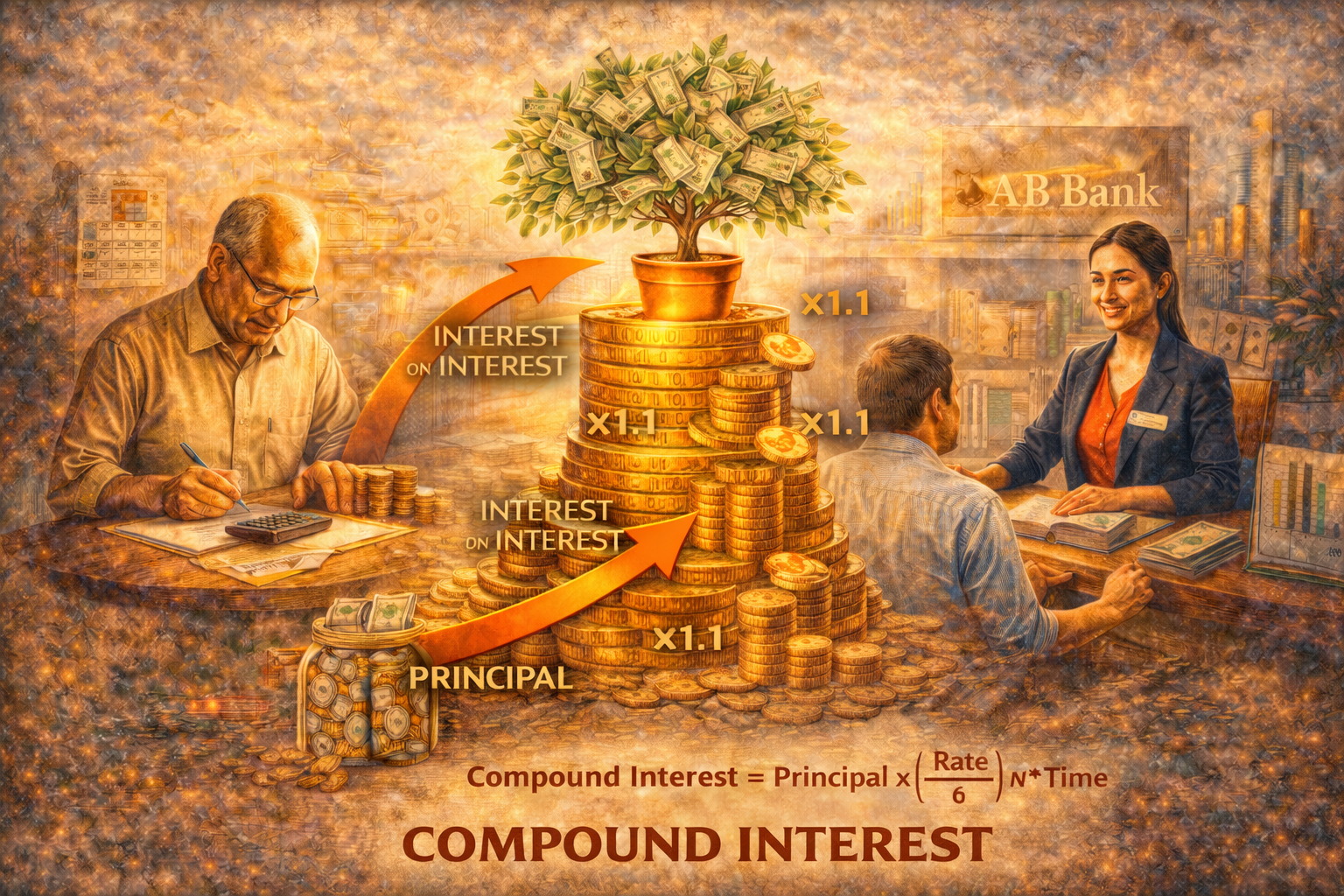
💰 கூட்டு வட்டி (Compound Interest) – முழு விளக்கம்
கூட்டு வட்டி என்பது முதல்தொகையுடன் சேர்த்து, முந்தைய காலங்களில் கிடைத்த வட்டிக்கும் மீண்டும் வட்டி கணக்கிடப்படும் முறையாகும். இது வட்டி மீது வட்டி (Interest on Interest) எனவும் அழைக்கப்படுகிறது.
📌 வரையறை
ஒவ்வொரு காலப்பகுதியின் முடிவில் கிடைக்கும் வட்டியை முதல்தொகையுடன் சேர்த்து, அடுத்த காலத்திற்கு வட்டி கணக்கிடுவது கூட்டு வட்டி ஆகும்.
🧮 முக்கிய சூத்திரம்
A = P (1 + R/100)T
- ✔ A = Amount (மொத்த தொகை)
- ✔ P = Principal (முதல்தொகை)
- ✔ R = Rate of Interest (வட்டி விகிதம்)
- ✔ T = Time (காலம்)
💡 கூட்டு வட்டி (CI)
CI = A - P
📊 எடுத்துக்காட்டு
- ✔ P = ₹1000
- ✔ R = 10%
- ✔ T = 2 years
A = 1000 (1 + 10/100)2 = 1000 × (1.1)2 = 1000 × 1.21 = ₹1210
CI = 1210 - 1000 = ₹210
🔄 தனி வட்டி vs கூட்டு வட்டி
- ✔ தனி வட்டி → முதல்தொகைக்கு மட்டும்
- ✔ கூட்டு வட்டி → வட்டி மீதும் வட்டி
- ✔ கூட்டு வட்டி அதிகமாக இருக்கும்
📏 முக்கிய குறிப்புகள்
- ✔ வட்டி வருடம், அரை வருடம், காலாண்டு என மாறலாம்
- ✔ Compound Interest வேகமாக அதிகரிக்கும்
முக்கிய குறிப்புகள் (TNPSC / Maths):
- ✔ A = P(1 + R/100)^T
- ✔ CI = A - P
- ✔ Interest on Interest
தேர்வுகளில் “Compound Interest formula என்ன?”, “CI மற்றும் SI வித்தியாசம் என்ன?” போன்ற கேள்விகள் கேட்கப்படுகின்றன.
🧮 கூட்டு வட்டி சூத்திரங்கள் (Compound Interest Formulas)
கூட்டு வட்டி கணக்கீட்டில் பயன்படுத்தப்படும் முக்கிய சூத்திரங்கள் தேர்வுகளில் மிகவும் முக்கியமானவை. இவை Amount மற்றும் Interest கணக்கிட உதவுகின்றன.
📌 முக்கிய சூத்திரம்
A = P (1 + R/100)T
- ✔ A = Amount (மொத்த தொகை)
- ✔ P = Principal (முதல்தொகை)
- ✔ R = Rate of Interest
- ✔ T = Time (years)
💰 கூட்டு வட்டி (CI)
CI = A - P
🔄 மாற்று சூத்திரங்கள்
1️⃣ Principal (P)
P = A / (1 + R/100)T
2️⃣ Rate (R)
R = \[ (A / P)1/T - 1 \] × 100
3️⃣ Time (T)
T = log(A/P) / log(1 + R/100)
📊 Half-Yearly (அரை வருடம்)
- ✔ R → R/2
- ✔ T → 2T
A = P (1 + R/200)2T
📊 Quarterly (காலாண்டு)
- ✔ R → R/4
- ✔ T → 4T
A = P (1 + R/400)4T
📘 Shortcut (2 years)
CI = P (R/100)2
📏 முக்கிய குறிப்புகள்
- ✔ Compound Interest = Interest on Interest
- ✔ Time unit must match interest period
- ✔ More compounding → more interest
முக்கிய குறிப்புகள் (TNPSC / Maths):
- ✔ A = P(1 + R/100)^T
- ✔ CI = A - P
- ✔ Half yearly → R/2, 2T
- ✔ Quarterly → R/4, 4T
தேர்வுகளில் “Compound Interest formula”, “Half yearly interest எப்படி கணக்கிடுவது?” போன்ற கேள்விகள் கேட்கப்படுகின்றன.
🧮 கூட்டு வட்டி (Compound Interest) – 10 எடுத்துக்காட்டுகள்
📘 Example 1
P = 1000, R = 10%, T = 2
A = 1000(1.1)2 = 1210 → CI = ₹210
📘 Example 2
P = 2000, R = 5%, T = 2
A = 2000(1.05)2 = 2205 → CI = ₹205
📘 Example 3
P = 1500, R = 8%, T = 3
A = 1500(1.08)3 = 1889.57 → CI ≈ ₹389.57
📘 Example 4
P = 5000, R = 6%, T = 2
A = 5000(1.06)2 = 5618 → CI = ₹618
📘 Example 5
P = 2500, R = 4%, T = 3
A = 2500(1.04)3 = 2812 → CI = ₹312
📘 Example 6
P = 3000, R = 7%, T = 2
A = 3000(1.07)2 = 3434.7 → CI ≈ ₹434.7
📘 Example 7
P = 1200, R = 9%, T = 2
A = 1200(1.09)2 = 1425.48 → CI ≈ ₹225.48
📘 Example 8
P = 4000, R = 5%, T = 3
A = 4000(1.05)3 = 4630.5 → CI ≈ ₹630.5
📘 Example 9
P = 3500, R = 6%, T = 2
A = 3500(1.06)2 = 3932.6 → CI ≈ ₹432.6
📘 Example 10
P = 10000, R = 3%, T = 2
A = 10000(1.03)2 = 10609 → CI = ₹609
Quick Revision:
- ✔ A = P(1 + R/100)^T
- ✔ CI = A - P
⚡ கூட்டு வட்டி (Compound Interest) – Shortcut & Tricks
கூட்டு வட்டி கணக்குகளை வேகமாக செய்ய சில shortcut முறைகள் மிகவும் உதவும். இவை போட்டித் தேர்வுகளில் நேரத்தை சேமிக்க உதவும்.
🚀 Trick 1: 2 ஆண்டுகளுக்கான Shortcut
CI = P (R/100)2
👉 Difference (CI – SI) = P (R/100)2
📘 Example
P = 1000, R = 10%
Difference = 1000 × (10/100)2 = ₹10
🚀 Trick 2: 3 ஆண்டுகளுக்கான Shortcut
CI – SI = P (R/100)2 (3 + R/100)
📘 Example
P = 1000, R = 10%
= 1000 × (0.1)2 × (3.1) = ₹31
🚀 Trick 3: Small % (Approximation)
- ✔ (1 + x)2 ≈ 1 + 2x
- ✔ (1 + x)3 ≈ 1 + 3x
👉 Small interest ratesல் fast calculation
🚀 Trick 4: Doubling Trick
Amount doubles when:
Time ≈ 72 / Rate
📘 Example
R = 8%
Time ≈ 72 / 8 = 9 years
🚀 Trick 5: Half-Yearly Shortcut
- ✔ R → R/2
- ✔ T → 2T
👉 Faster calculation using modified values
🚀 Trick 6: Percentage Method
10% → ×1.1 5% → ×1.05 20% → ×1.2
📘 Example
1000 at 10% for 2 years
1000 × 1.1 × 1.1 = ₹1210
🚀 Trick 7: SI vs CI Difference
- ✔ 2 years → P(R/100)2
- ✔ 3 years → P(R/100)2(3 + R/100)
📏 முக்கிய குறிப்புகள்
- ✔ அதிக compounding → அதிக interest
- ✔ Shortcut mostly for exams
- ✔ Practice முக்கியம்
Exam Tips:
- ✔ Multiplication method fastest
- ✔ Remember 72 rule
- ✔ Use shortcuts only when applicable
போட்டித் தேர்வுகளில் “CI vs SI difference”, “Shortcut method solve” போன்ற கேள்விகள் அதிகம் வரும்.
மக்கள் கேட்கும் கேள்விகள்
உங்களுக்கான முக்கிய பதில்கள்
மூலதனம் + முந்தைய வட்டியையும் சேர்த்து கணக்கிடப்படும் வட்டி.
A=P(1+R/100)T
CI = Amount – Principal
A = 1000(1 + 10/100)² = 1210
CI = 1210 – 1000 = ₹210
A = 2000(1.05)² = ₹2205
Rate = R/2, Time = 2T
Half-yearly compound → அதிக வட்டி கிடைக்கும்
SI → Principal மட்டும்
CI → Principal + Interest
CI → Principal + Interest
1 ஆண்டு மட்டும் சமம்
2 ஆண்டுகளுக்கு CI > SI
2 ஆண்டுகளுக்கு CI > SI