தலைப்பு
ஐந்தாண்டுத் திட்டங்கள்
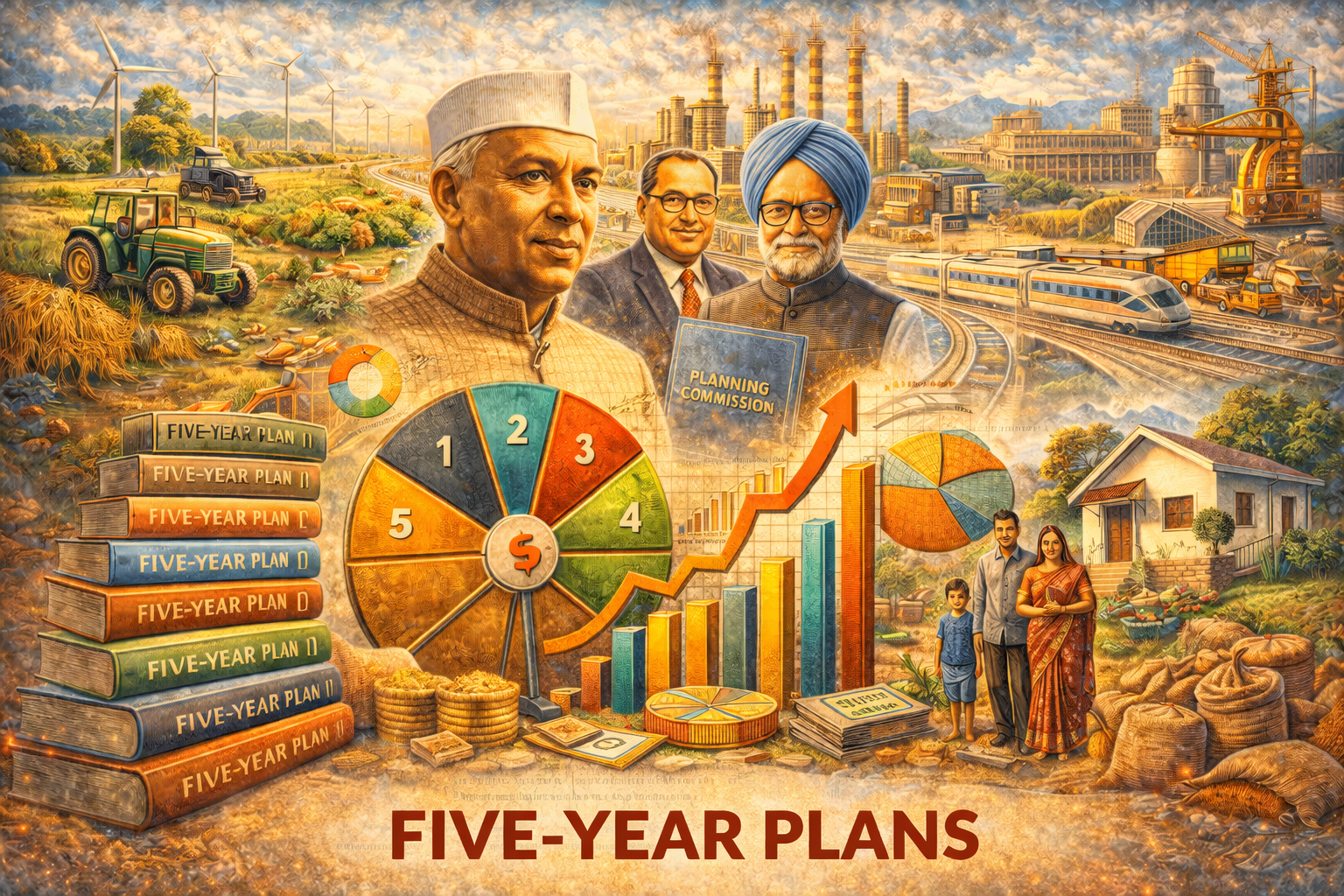
📘 ஐந்தாண்டுத் திட்டங்கள் (Five Year Plans) – முன்னுரை
இந்தியாவின் பொருளாதார வளர்ச்சியை திட்டமிட்ட முறையில் முன்னேற்றுவதற்காக அரசு அறிமுகப்படுத்திய முக்கியமான திட்டமிடல் முறையே ஐந்தாண்டுத் திட்டங்கள் (Five Year Plans) ஆகும்.
சுதந்திரத்திற்குப் பிறகு இந்தியா ஒரு வளர்ந்து வரும் நாடாக இருந்ததால், வளங்களைச் சரியாக பயன்படுத்தி நாட்டின் பொருளாதாரத்தை மேம்படுத்த திட்டமிட்ட வளர்ச்சி அவசியமாக இருந்தது. இதன் விளைவாக, 1951ஆம் ஆண்டு முதல் ஐந்தாண்டுத் திட்டம் தொடங்கப்பட்டது.
📌 திட்டமிடலின் நோக்கம்
- ✔ பொருளாதார வளர்ச்சி (Economic Growth)
- ✔ வறுமை நீக்கம் (Poverty Eradication)
- ✔ வேலைவாய்ப்பு அதிகரிப்பு (Employment Generation)
- ✔ தொழில்மயமாக்கல் (Industrial Development)
- ✔ விவசாய வளர்ச்சி (Agricultural Development)
🏛️ திட்ட ஆணையம் (Planning Commission)
- ✔ 1950ஆம் ஆண்டு நிறுவப்பட்டது
- ✔ ஐந்தாண்டுத் திட்டங்களை வடிவமைத்தது
- ✔ 2015ஆம் ஆண்டு NITI Aayog ஆக மாற்றப்பட்டது
🌏 முக்கியத்துவம்
- ✔ நாட்டின் வளங்களை திறம்பட பயன்படுத்த உதவியது
- ✔ பல துறைகளில் சமநிலை வளர்ச்சியை ஏற்படுத்தியது
- ✔ இந்திய பொருளாதார முன்னேற்றத்திற்கு அடித்தளம் அமைத்தது
முக்கிய குறிப்புகள் (TNPSC):
- ✔ First Five Year Plan – 1951
- ✔ Planning Commission – 1950
- ✔ NITI Aayog – 2015
- ✔ Goal – Economic Development
TNPSC தேர்வுகளில் “ஐந்தாண்டுத் திட்டம் என்றால் என்ன?”, “முதல் திட்டம் எப்போது தொடங்கப்பட்டது?” போன்ற கேள்விகள் இந்தத் தலைப்பிலிருந்து அடிக்கடி கேட்கப்படுகின்றன.
📘 ஐந்தாண்டுத் திட்டங்கள் (Five Year Plans) – அறிமுகம்
இந்தியாவின் பொருளாதார வளர்ச்சியை திட்டமிட்ட முறையில் முன்னேற்றுவதற்காக அரசு செயல்படுத்திய முக்கியமான திட்டமிடல் முறையே ஐந்தாண்டுத் திட்டங்கள் ஆகும். ஒவ்வொரு திட்டமும் 5 ஆண்டுகள் காலத்திற்கு வகுக்கப்பட்டு, நாட்டின் வளங்களை சரியான முறையில் பயன்படுத்தி வளர்ச்சியை அடைவதே இதன் நோக்கமாகும்.
சுதந்திரத்திற்கு பின்னர் இந்தியா வறுமை, வேலைஇல்லாமை, தொழில்மயமாக்கல் குறைவு போன்ற பல சவால்களை சந்தித்தது. இதை சமாளிக்க, சோவியத் நாட்டின் திட்டமிடல் முறையை முன்மாதிரியாகக் கொண்டு இந்தியா திட்டமிட்ட பொருளாதார வளர்ச்சி (Planned Economic Development) முறையை ஏற்றுக்கொண்டது.
📅 தொடக்கம்
- ✔ 1951 – முதல் ஐந்தாண்டுத் திட்டம் தொடங்கப்பட்டது
- ✔ திட்ட ஆணையம் (Planning Commission) மூலம் செயல்படுத்தப்பட்டது
🎯 முக்கிய நோக்கங்கள்
- ✔ பொருளாதார வளர்ச்சி
- ✔ வறுமை ஒழிப்பு
- ✔ வேலைவாய்ப்பு உருவாக்கம்
- ✔ விவசாய மற்றும் தொழில் வளர்ச்சி
- ✔ சமூக நலன் மேம்பாடு
🏛️ திட்டமிடல் அமைப்புகள்
- ✔ Planning Commission – திட்டங்களை உருவாக்கியது
- ✔ NITI Aayog (2015) – புதிய திட்டமிடல் அமைப்பு
📊 திட்டங்களின் தன்மை
- ✔ ஒவ்வொரு திட்டமும் 5 ஆண்டுகள்
- ✔ துறைவாரியான இலக்குகள் (Sector-wise targets)
- ✔ வளங்களின் ஒழுங்குபடுத்தல்
🌏 முக்கியத்துவம்
- ✔ இந்தியாவின் பொருளாதார வளர்ச்சிக்கு அடித்தளம் அமைத்தது
- ✔ சமநிலை வளர்ச்சியை ஊக்குவித்தது
- ✔ வறுமை மற்றும் வேலைஇல்லாமையை குறைக்க உதவியது
முக்கிய குறிப்புகள் (TNPSC):
- ✔ First Plan – 1951
- ✔ Duration – 5 years
- ✔ Planning Commission – 1950
- ✔ NITI Aayog – 2015
- ✔ Aim – Economic & Social Development
TNPSC தேர்வுகளில் “ஐந்தாண்டுத் திட்டங்கள் அறிமுகம்”, “அதன் நோக்கங்கள் என்ன?” போன்ற கேள்விகள் அடிக்கடி கேட்கப்படுகின்றன.
📊 ஐந்தாண்டுத் திட்டங்கள் (1 முதல் 6 வரை) – சுருக்கமான விளக்கம்
இந்தியாவின் முதல் ஆறு ஐந்தாண்டுத் திட்டங்கள் நாட்டின் பொருளாதார வளர்ச்சிக்கு அடித்தளமாக இருந்தன. ஒவ்வொரு திட்டமும் தனித்தனி நோக்கங்களுடன் செயல்பட்டது.
📋 திட்டங்கள் – சுருக்க அட்டவணை
| திட்டம் | காலம் | முக்கிய நோக்கம் |
|---|---|---|
| 1வது திட்டம் | 1951–1956 | விவசாய வளர்ச்சி, நீர்ப்பாசனம் |
| 2வது திட்டம் | 1956–1961 | தொழில்மயமாக்கல் (Industrialization) |
| 3வது திட்டம் | 1961–1966 | சுயமரியாதை (Self-sufficiency), விவசாயம் |
| 4வது திட்டம் | 1969–1974 | நிலைத்தன்மை + வளர்ச்சி (Growth with Stability) |
| 5வது திட்டம் | 1974–1979 | வறுமை ஒழிப்பு (Garibi Hatao) |
| 6வது திட்டம் | 1980–1985 | வேலைவாய்ப்பு, தொழில்நுட்ப வளர்ச்சி |
📘 விரிவான சுருக்கம்
1️⃣ முதல் ஐந்தாண்டுத் திட்டம் (1951–1956)
- ✔ முக்கியம்: விவசாயம்
- ✔ நீர்ப்பாசன திட்டங்கள் (Dams)
- ✔ உணவுத்தானிய உற்பத்தி அதிகரிப்பு
2️⃣ இரண்டாம் திட்டம் (1956–1961)
- ✔ தொழில்மயமாக்கல் முக்கியம்
- ✔ Heavy Industries வளர்ச்சி
- ✔ Mahalanobis Model
3️⃣ மூன்றாம் திட்டம் (1961–1966)
- ✔ சுயநிறைவு நோக்கம்
- ✔ விவசாய வளர்ச்சி
- ✔ ஆனால் போர் & வறட்சி காரணமாக தோல்வி
4️⃣ நான்காம் திட்டம் (1969–1974)
- ✔ வளர்ச்சி + நிலைத்தன்மை
- ✔ விலை கட்டுப்பாடு
- ✔ Green Revolution ஆதரவு
5️⃣ ஐந்தாம் திட்டம் (1974–1979)
- ✔ Garibi Hatao (வறுமை ஒழிப்பு)
- ✔ வேலைவாய்ப்பு அதிகரிப்பு
- ✔ திட்டம் முன்கூட்டியே நிறுத்தப்பட்டது
6️⃣ ஆறாம் திட்டம் (1980–1985)
- ✔ பொருளாதார சீர்திருத்த தொடக்கம்
- ✔ தொழில்நுட்ப வளர்ச்சி
- ✔ வறுமை குறைப்பு
முக்கிய குறிப்புகள் (TNPSC):
- ✔ 1st Plan – Agriculture
- ✔ 2nd Plan – Industry
- ✔ 3rd Plan – Self-sufficiency
- ✔ 5th Plan – Garibi Hatao
- ✔ 6th Plan – Technology + Employment
TNPSC தேர்வுகளில் “முதல் 6 ஐந்தாண்டுத் திட்டங்கள் பற்றி எழுதுக” என்ற கேள்வி அடிக்கடி கேட்கப்படுகிறது.
📊 ஐந்தாண்டுத் திட்டங்கள் (7 முதல் 12 வரை) – சுருக்கமான விளக்கம்
இந்தியாவின் 7வது முதல் 12வது ஐந்தாண்டுத் திட்டங்கள் பொருளாதார சீர்திருத்தங்கள், மனித வள மேம்பாடு மற்றும் நிலையான வளர்ச்சி ஆகியவற்றை முன்னிலைப்படுத்தின.
📋 திட்டங்கள் – சுருக்க அட்டவணை
| திட்டம் | காலம் | முக்கிய நோக்கம் |
|---|---|---|
| 7வது திட்டம் | 1985–1990 | வேலைவாய்ப்பு, உற்பத்தி, Self-reliance |
| 8வது திட்டம் | 1992–1997 | மனித வள மேம்பாடு, கல்வி, சுகாதாரம் |
| 9வது திட்டம் | 1997–2002 | சமநிலை வளர்ச்சி, வறுமை குறைப்பு |
| 10வது திட்டம் | 2002–2007 | வேகமான வளர்ச்சி (8% GDP target) |
| 11வது திட்டம் | 2007–2012 | Inclusive Growth (ஒப்புரவு வளர்ச்சி) |
| 12வது திட்டம் | 2012–2017 | Faster, Sustainable & Inclusive Growth |
📘 விரிவான சுருக்கம்
7️⃣ ஏழாம் திட்டம் (1985–1990)
- ✔ வேலைவாய்ப்பு உருவாக்கம்
- ✔ உணவு உற்பத்தி அதிகரிப்பு
- ✔ Self-reliance (சுயநிறைவு)
8️⃣ எட்டாம் திட்டம் (1992–1997)
- ✔ 1991 பொருளாதார சீர்திருத்தத்திற்குப் பிறகு முதல் திட்டம்
- ✔ கல்வி, சுகாதாரம் முக்கியம்
- ✔ மனித வள மேம்பாடு
9️⃣ ஒன்பதாம் திட்டம் (1997–2002)
- ✔ சமநிலை வளர்ச்சி
- ✔ வறுமை குறைப்பு
- ✔ விவசாய வளர்ச்சி
🔟 பத்தாம் திட்டம் (2002–2007)
- ✔ 8% GDP வளர்ச்சி இலக்கு
- ✔ வேலைவாய்ப்பு அதிகரிப்பு
- ✔ வறுமை குறைப்பு
1️⃣1️⃣ பதினொன்றாம் திட்டம் (2007–2012)
- ✔ Inclusive Growth (ஒப்புரவு வளர்ச்சி)
- ✔ கல்வி, சுகாதாரம் மேம்பாடு
- ✔ சமூக நலன்
1️⃣2️⃣ பன்னிரண்டாம் திட்டம் (2012–2017)
- ✔ Faster + Sustainable Growth
- ✔ சுற்றுச்சூழல் பாதுகாப்பு
- ✔ Inclusive Development
முக்கிய குறிப்புகள் (TNPSC):
- ✔ 8th Plan – Human Development
- ✔ 10th Plan – 8% GDP target
- ✔ 11th Plan – Inclusive Growth
- ✔ 12th Plan – Sustainable Growth
TNPSC தேர்வுகளில் “7–12 ஐந்தாண்டுத் திட்டங்கள் பற்றி எழுதுக” என்ற கேள்வி அடிக்கடி கேட்கப்படுகிறது.
மக்கள் கேட்கும் கேள்விகள்
உங்களுக்கான முக்கிய பதில்கள்
1951 ஆம் ஆண்டு
1951 – 1956
வேளாண்மை வளர்ச்சி
தொழில்துறை வளர்ச்சி (Industrialization)
திட்டக்குழு (Planning Commission)
2015
NITI Aayog
மொத்தம் 12 திட்டங்கள்
2012 – 2017
நாட்டின் பொருளாதார வளர்ச்சி மற்றும் முன்னேற்றம்